
spirulina Growing Guide - fundamentals
We are committed to supporting you to:
Grow the seed-culture you have just received into a thriving working culture that will keep on giving.
Remember spirulina is an ancient organism that was here from the beginning of time. The species is over 3.6 billion years old and so has had a long time to figure out how to survive and flourish. Bottom line? It is hard to kill.
However:
There are a few things you need to do to ensure that your culture thrives. You do need to care for it!
But luckily it’s easy and won’t take up a lot of your time.
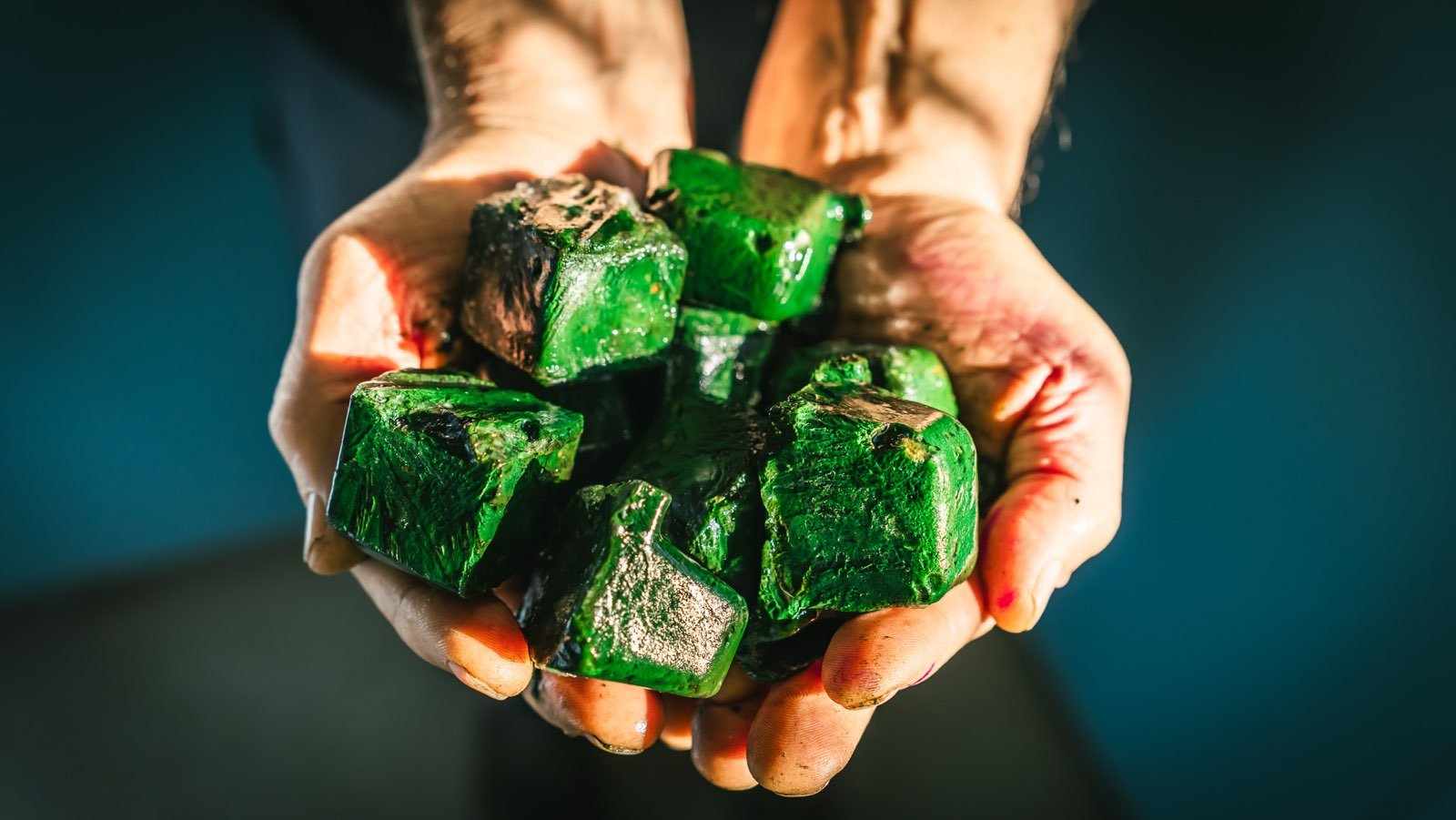
The first thing you have to do:
When you receive your your culture, please immediately follow the instructions described in the “Immediate Culture Care” section (following this section). You will also have received a hard-copy of the Immediate Culture Care instructions with your culture.
If you want to build up a thriving healthy culture, please follow the instructions.
When people have trouble with growing their spirulina, almost always it is because they do not follow the instructions. If you are new to growing Spirulina, please follow the instructions without deviation.
You can improvise later when you get to know Spirulina a bit better. The rest of the manual gives you background and further detailed instructions on what equipment to use and how to set up the micro-farm and the build up to final volume.
For now though, to grow your culture up to a volume of 10 L, please carefully follow the steps in the Quick Guide below.
While it seems like a lot of information to take in at first – the basics are very simple.
You place the culture in the sun, keep it moving, monitor the temperature, build up the volume slowly with the Fast Grow Nutrient mix, harvest when it is deep green in colour and the pH is 10 or more and add replacement nutrients. It really is that simple – 6 moving parts.
Here it is in a nutshell:

Spirulina uses the sun’s energy to turn carbon dioxide into its food (sugar). So right now, it needs sunlight and fresh air because it has just spent up to a week in the post, and thus without food or air.
After receiving your culture immediately take the following steps
Step 1
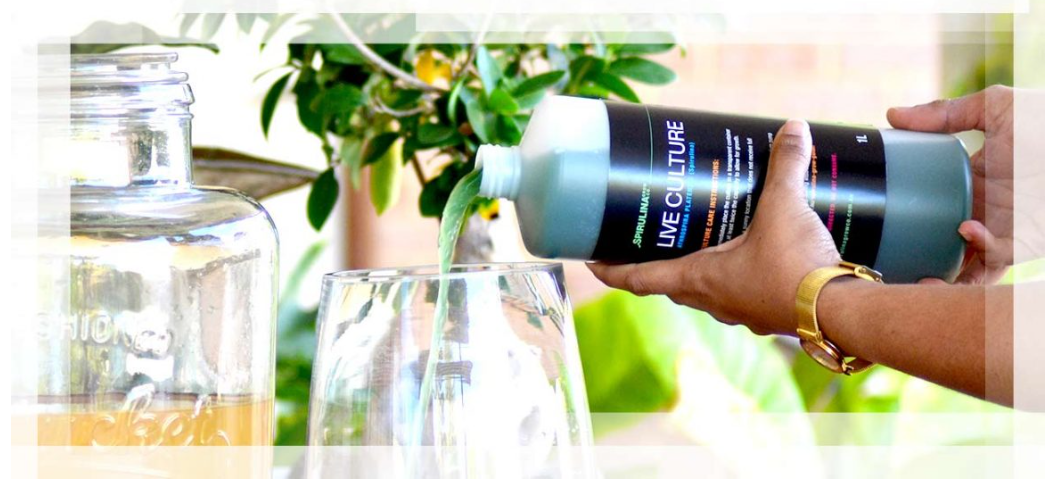
Give it a gentle shake and open the top of the culture bottle to allow it to breathe.
If you are not immediately ready for Step 2 then then place it in shaded sunlight. Be sure to agitate your culture a few times a day by gently shaking the bottle.
Step 2
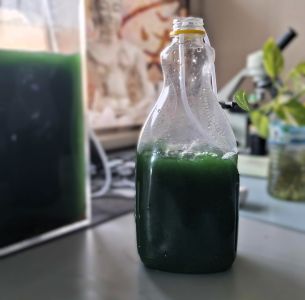
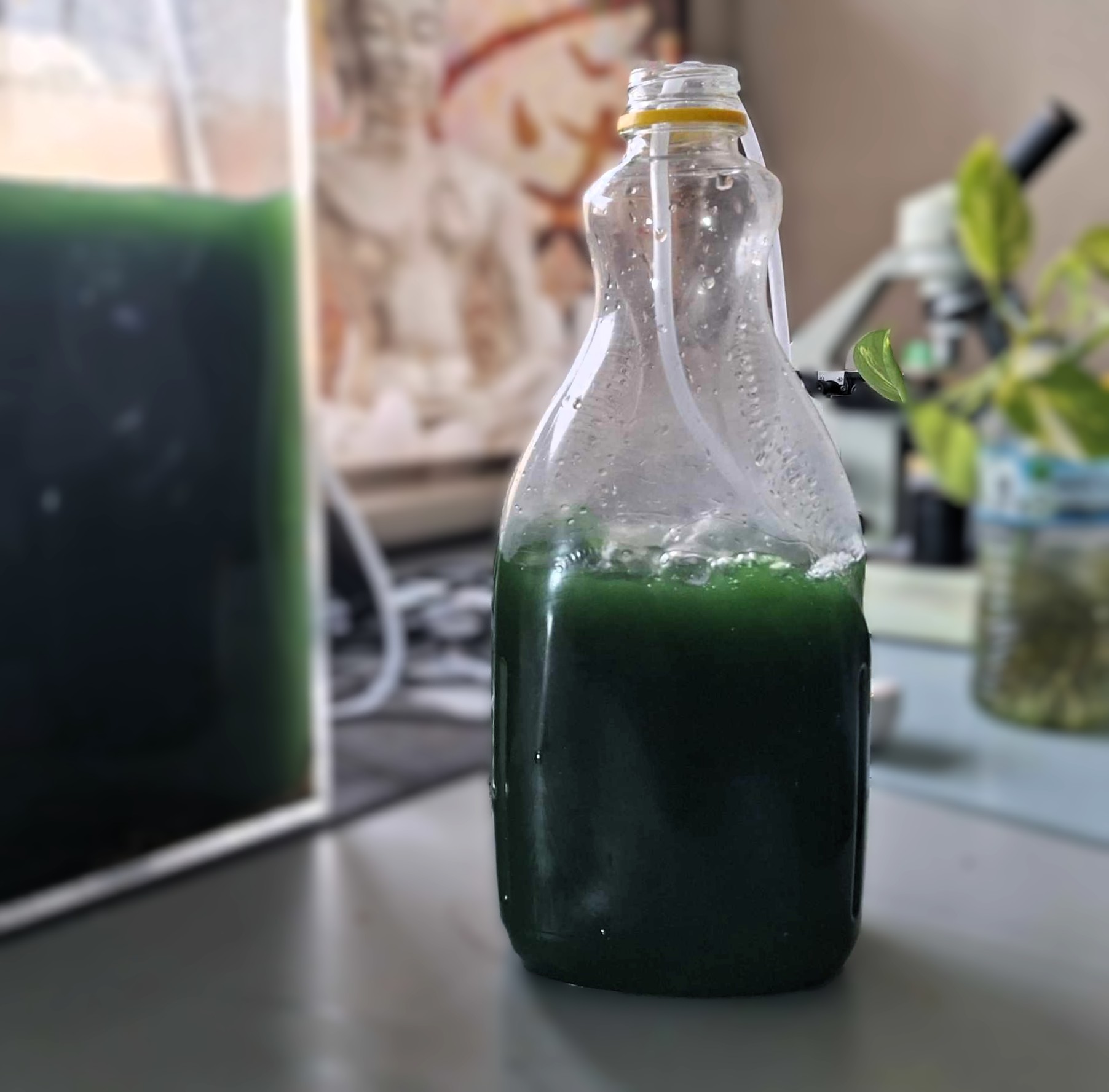
Transfer the culture to a transparent container.
Any clean, non-reactive, transparent container will do. Glass is always better though. The container used should be larger than the volume of the culture you received, but not too big. It is best to use a container that is taller than it is broad. Glass jars or dink bottles are perfect.
As a guide
- For 50mls of culture, transfer to a container that’s around 100 - 250mls
- For 500mls or 1000mls of culture, transfer to a 2L – 4L container
Step 3
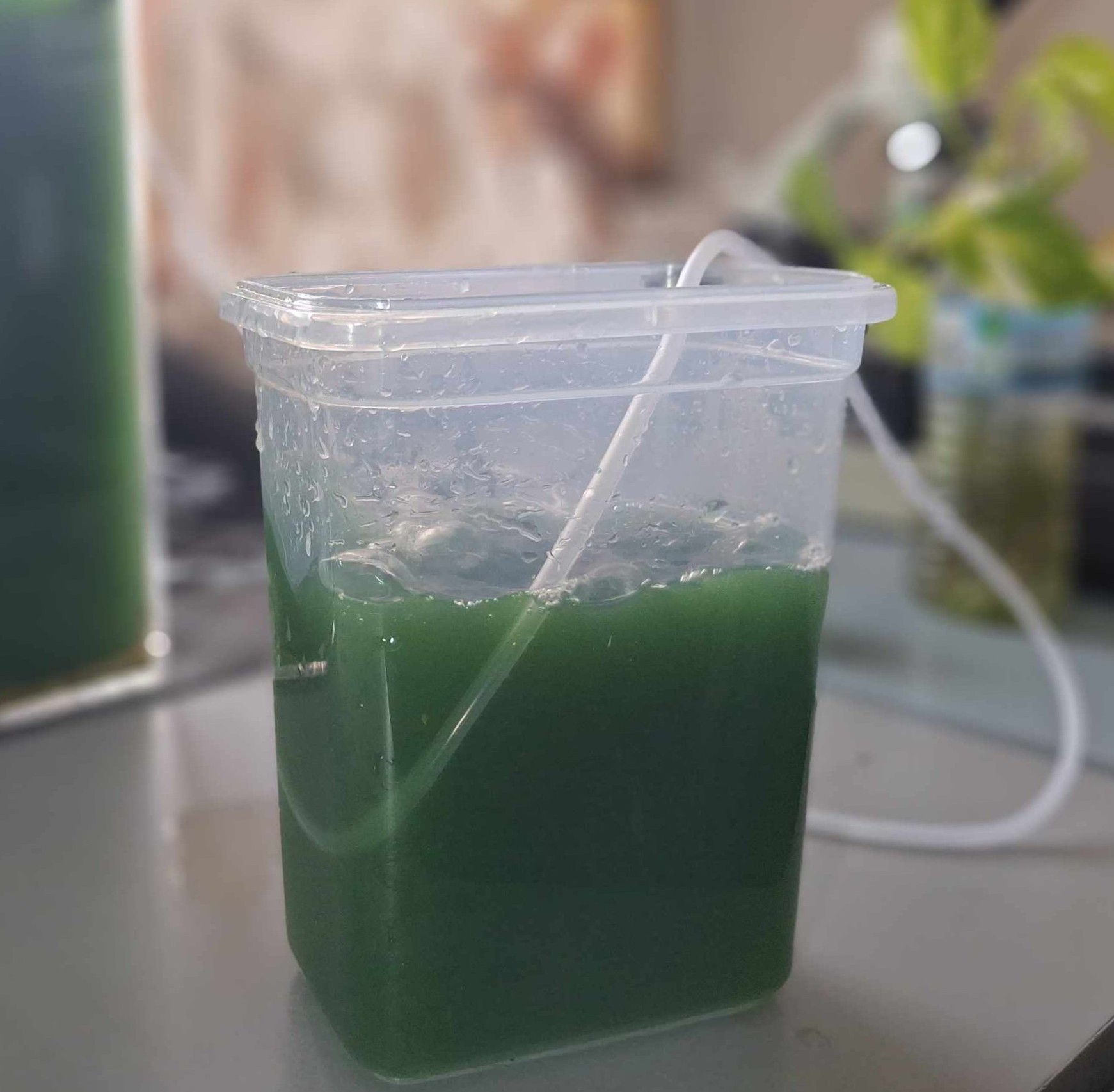
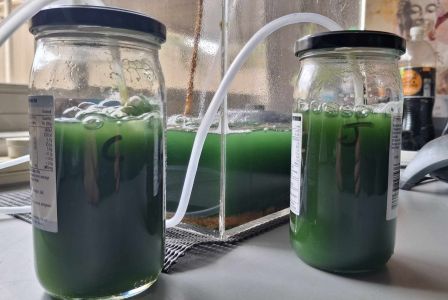
Bubble air through the culture.
The purpose of bubbling air through the culture is to facilitate gas exchange and, more importantly, to mix the culture so that each strand of spirulina (the trichomes) get to spend some time in the light, but not too much time.
You will need:
- An aquarium air pump
- Silicone tubing
- An in-line air valve
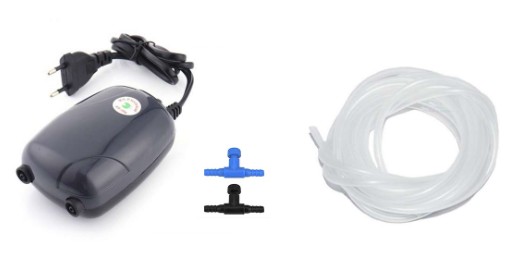
- Select and appropriate length of tube and cut it about 1/3 of the length. Join the two pieces with the in-line valve.
- Fix the short end of the tube to the pump outlet and open the valve.
- place the tube into the culture vessel and turn on the pump.
- Adjust the pump so the bubbles are vigorous enough to mix the culture but not too aggressive.
Step 4
Place the culture in gentle indirect sunlight.
Do not, at this stage, place your culture in direct sunlight. This is important because the organism cannot handle an intense light load when it is at a small volume and is unable to self-shade. You run the risk of overloading its photosynthetic apparatus and also overheating the culture.
You could place the culture in a sunny location but cover it with a cloth that does not let all the light through.
As the culture becomes larger and denser, it can self-shade and will do better in direct sunlight.

Step 5
Monitor temperature
Spirulina can live at temperatures between 2 – 40oC. However, it will thrive and vigorously multiply between 27 – 37oC. So, if you live in a cold place, take steps to maintain the temperature of your culture to at least above 15oC and ideally between 27 and 37oC.
It is important to monitor the temperature of small volumes because when they are in the sun they can rapidly heat up. If you are not vigilant you can lose a culture at this stage through over heating.
You might like to buy a digital thermometer with a probe to monitor the culture’s temperature. You may also consider purchasing a USB heat matt to keep the young culture warm. Both of these items are cheap on eBay.
Step 6
Prepare for the next stage
Your culture can survive comfortably under the conditions described above for a long time. However, to gain the benefits of Spirulina, you will need to increase the volume. Therefore, the next step will be to increase the volume of your culture.
The quick guide section below details how you build up to 10L – 15L. Please follow these instructions carefully to ensure you end up with a healthy, thriving culture. While 10 – 15L represents a solid volume to work with and build on, you will need at least 80 – 100L to harvest meaningful amounts of spirulina
Before working with your culture a few notes on hygiene and safety:
hygiene
- Before transferring your culture to a new container always give the container a good wash with hot soapy water followed by a thorough rinse with clean water. Some people also take the extra precaution of spraying their equipment and containers with a surface disinfectant before cleaning.
- Wash your hands before handling Spirulina equipment and or putting your hands in the culture. Remember, there are literally 1000s of microorganisms on your skin. You could also use disposable latex gloves to be extra sure.
- Keep your equipment clean. Wash whatever you put in contact with the culture. Warm soapy water works best with a final fresh water rinse. The cleaner the better.
- Remember you are aiming to keep your culture pure and clean because you will end up eating it. Having said this, the pH of your culture does a lot of work. Once the pH gets up to 10 and over - not many potentially troublesome organisms can survive

Saftey
- When working with your culture, wear gloves and safety glasses. Remember, your culture naturally operates at high pH levels, which can be harmful to your eyes.


Notes about this guide
The purpose of this quick guide is to get you expanding the culture in an easy to follow step by step way so you end up with at least 10L of healthy culture. You will need a lot more, at least 80 - 100L, to have a good working volume. However 10L is a good start and is a stable amount. How to set up your final working Spirulina tank (bioreactor) and build up to the final culture volume is described in detail in the rest of the manual.
This Quick Guide assumes you have taken the steps described in the immediate culture care section above. By now you should:
- Have transferred the culture to a larger transparent container
- Be bubbling air through the culture so that it is in constant motion
- Have placed your culture in the sunlight
- Be monitoring the temperature
Step 1
Make up the nutrient solution
To begin expanding the culture you will need to make up an appropriate amount of nutrient solution. An appropriate amount means making enough to undertake a few cycles of expansion. You don't want to have large amounts of culture media sitting around running the risk of being contaminated.
If you are starting off with 500 ml and you are adding roughly 1/3 of the volume you will need 160 ml of nutrient media. For the next expansion you will need (500+160)/3 = 220ml. Thus for 2 rounds ofculture increase you will need to have made up a about 400ml of nutrient media.
To make up the media follow the instructions in the “Making up the Nutrient Solution” section below. Remember to use dechlorinated water. There is more about water in the basic elements section of this manual.
Step 2
Add nutrient solution
- Before adding nutrient solution to the culture, note its shade of green. This is a good reference point to indicate when you will next need to expand your culture.
- Add nutrient solution at a rate of roughly 1/3 of the current volume of the culture. This is important because you don’t want to dilute it too much and make it weak and vulnerable to sun damage. The table below give you an indication of how much nutrient media to add to a given volume of culture.
Current volume of culture | 50ml | 500ml | 1000ml | 1500ml | 2000ml | 5000ml |
|---|---|---|---|---|---|---|
Volume of Fast Grow nutrient media to add (ml) | 15ml | 150ml | 330ml | 500ml | 700ml | 1700ml |
- Make sure the culture and nutrient solution are at about the same temperature. Spirulina doesn’t like sudden temperature fluctuations.
- The Spirulina will multiply and grow into this new volume in 2 – 3 days if you are maintaining optimal temperature and it has at least 12 hours of light per day (more is better).
- Note the shade of green in this more dilute culture. Before you increase again you want youe culture to return to the same shade of green your culture was before adding the nutrient media.
Step 3
Monitor temperature
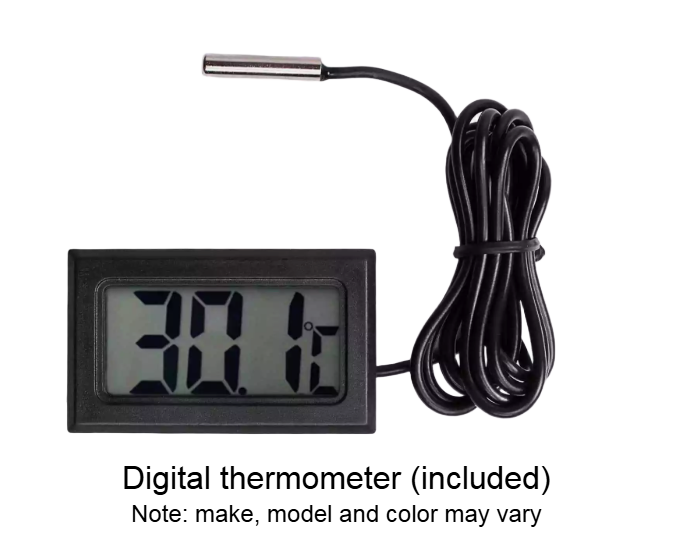
- Your culture is very responsive to temperature, so it is important to regularly monitorit. You can buy low cost digital thermometers that have a temperature probe on the end of a wire, like the one pictured to the left here.
- You want it sitting between 35 - 37oC. In this "Goldilocks zone," spirulina's metabolic processes are at their peak.
- If the culture sits between 15 - 25oC, the growth rate slows dramatically and the quality of the nutrients decline.
- Below 15oC growth stops entirely
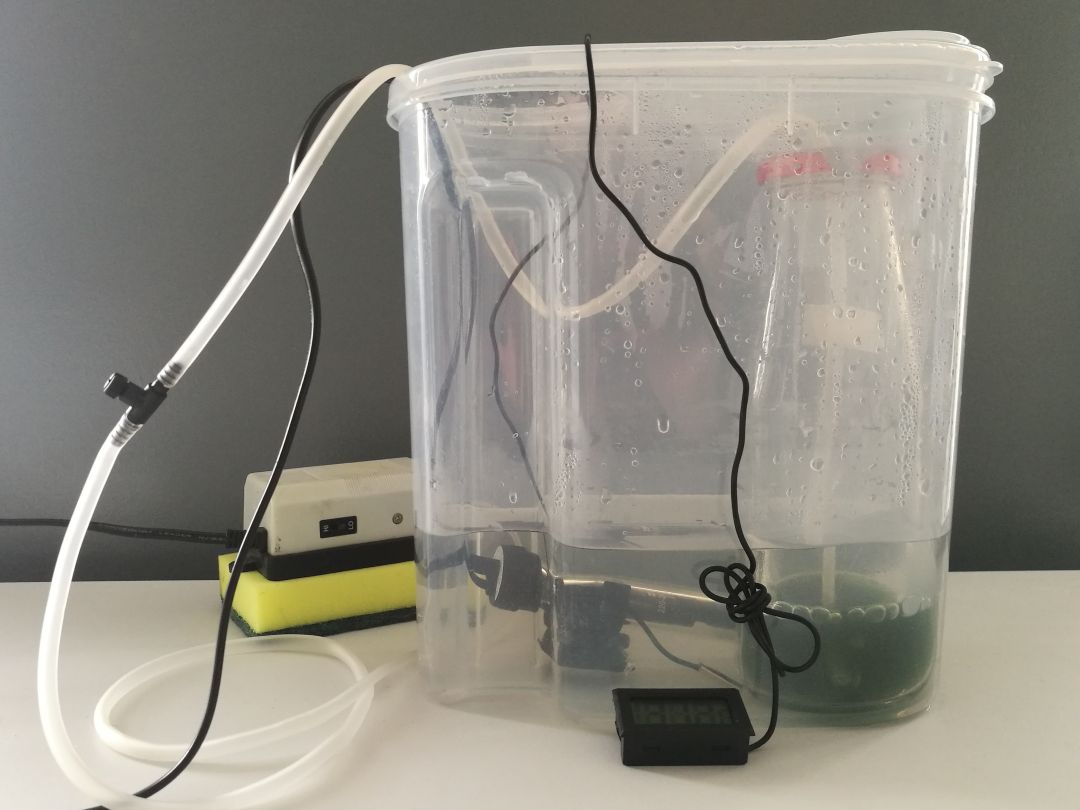
- If you are starting with a small volume and the ambient temperature is much below 25oC place your culture vessel into a 5 - 10L container and add water to the container (not your culture) so it is as high as the level of the culture. Obtain a small 25watt – 50watt aquarium heater. Set the heater to 32oC and place it in the 5-10L container so it will sit under the water. Turn it on (see picture ).
- You could also use a USB heating mat and place it under the culture
- For larger volumes you can place the heater directly into the culture. Remember though, the heater must be fully submerged
Step 4
Monitor Culture Colour
Keep an eye on the colour of the culture. As it grows into the new volume it will become denser and thus darker green.
When the colour returns to the original shade of green that you would have noted at the beginning of step 2 then go to step 5.
It should take 2 – 3 days under warm sunny conditions for the culture to grow into the new volume and turn dark green.
If the culture colour is not turning darker green and is yellowing this signifies there is a problem. Go to the troubleshooting section.
Step 5
Add more nutrient solution
- Remember, you add roughly 1/3 of the current volume.
- If you started off with 50ml you now have about 65ml from the last time you added the nutrient solution. So this time you would add roughly a 1/3 of 65ml which is about 20ml (you don’t need to be super exact).
- If you started with 500ml you would now have about 650 ml so you would add about 220ml.
- If you started with 1000ml you should now have about 1330ml so you would add about 450ml
Repeat Steps 3 to 5
- Continue to monitor the temperature. Remember the sweet spot is between 27 – 37oC. Make sure that the young culture is not in the full sunlight all day or it may overheat and or get sunburned.
- Each time you add more nutrient media remember you add 1/3 of the present volume. The amount you add each cycle will increase each to account for what you added in the last cycle.
- Repeat steps 2 - 5 until the current culture vessel is full.
Step 6
transfer culture to a larger container
- Once the current container is full, move the culture and the air-tube to a larger container (remember to keep the tube at the bottom of the container.)
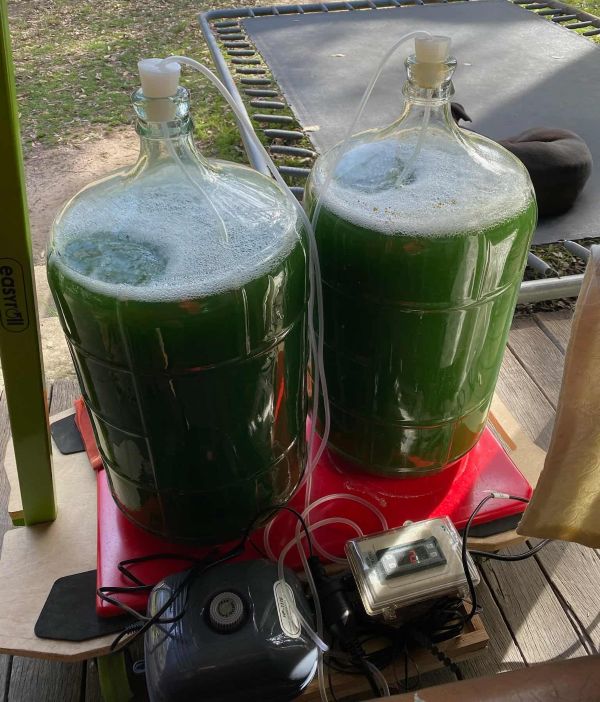
- If you have filled up a 600ml bottle then you could transfer the culture to a 1.5L. If you have filled up a 2L container then consider transferring to a 4 to 5L container – check the equipment section for ideas.
- Ensure that the bubbles from the air tube are keeping the culture moving.
- Remember the bubbles are more effective at moving the culture around if the culture is kept in a container that is taller than it is broad. That is, when the bubbles have to move through a taller column of culture they create more movement.
Step 7
Make a secchi disk.
To more accurately estimate the density of your culture, and thus when to increase the volume or harvest, make up a secchi disk.
Instructions to do this are detailed in the equipment section below.
Repeat Steps 3 to 6
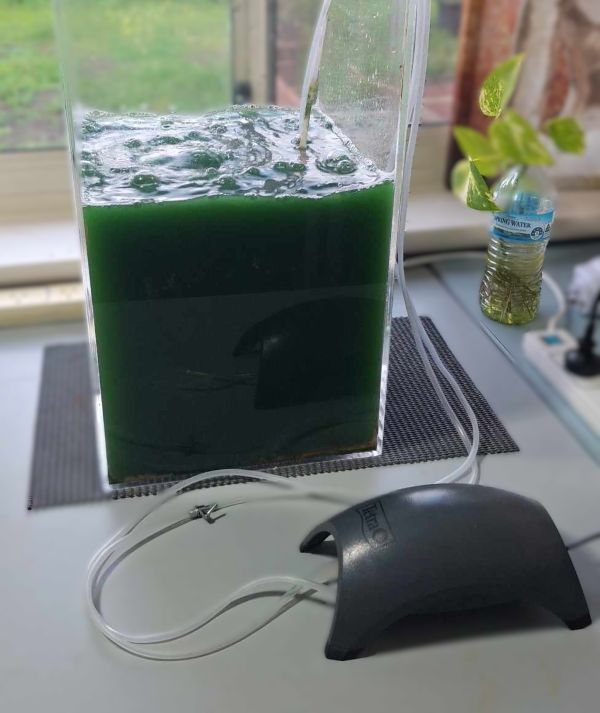
- Keep monitoring the temperature and colour of the culture,. Keep adding more nutrient solution and transferring to a larger container. The 10L we suggest here is somewhat arbitrary. You can, of course, continue to increase the volume as much as you like. This guide was designed to take you to around 10L so you have a robust culture to go forward with before setting up your final bioreactor.
- If you are now using a container that will allow you to insert a Secchi disk, then proceed as follows: slowly immerse the Secchi disk into the culture whilst in the sunlight. At the point you cannot see the disk anymore, read how many centimeters down you are from the stem of the disk. The lower the number the higher the density of the culture. Once your culture is at a density of around 2 cm, you are good to increase the volume.
- Remember to check that the culture is moving. If you are able to, stick the air hose to the bottom of the container with a suction cap. Ideally, you will get the best agitation if the end of the hose is in the center of the container.
Step 8
Establish a backup culture.
It is essential that you maintain a backup culture. We recommend a volume of 1 - 2 L .
Place it somewhere safe, preferably inside and somewhere it does not get intense sunlight all day A window sill or a desk is perfect.
Remember you will need to keep this culture moving as well.
Step 9
Read the rest of this guide and plan your next action.
You are strongly encouraged at this point to read the rest of this guide. If you are unsure about anything, then seek clarification from us. Once you read the following sections, you will know how to set up your Spirulina bioreactor, care for it and harvest the Spirulina.
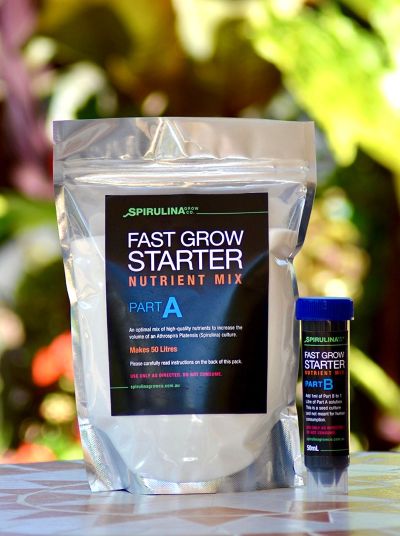
This section shows you how to make up a starter nutrient growth media (solution) from one of the Fast Grow Nutrient Mix kits that you can purchase from us, or that has been provided with a Spirulina starter culture.
These nutrient kits are used to increase the volume of the culture. They are not intended as a means of replacing nutrients that have been lost from the culture when Spirulina is harvested.
- Part A (1kg) contains mineral salts (solid)
- Part B (50ml) contains micro-nutrients chelated in liquid form
- Instruction sheet
One Fast Grow kit (pouch + tube of black liquid) will make up 50 L.
Step 1
Decide how much Nutrient solution to make up
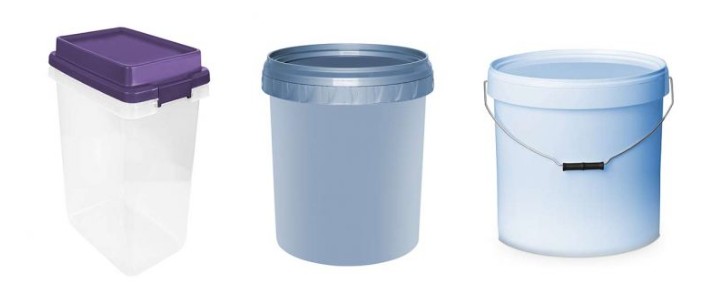
Decide on the amount of nutrient solution you want to make up. We advise you to only make enough for 2 -3 volume increases. Remember the nutrient solution is a perfect media for other algae. So to reduce the chances of your nutrient solution being overrun with an unwanted organism keep stored volumes to a minimum.
Store the unused nutrient solution in a clean sealed vessel. Place in a dark place if you are using a transparent container.
Step 2
Weigh out the nutrient salts
Using an appropriately sized container add the desired weight of part A salts for the volume you intend to make up. See the weights and volumes in the table below . For example, if you wanted to make up 500ml of solution, find 500 on the top row of the table below. Directly under the "500" in the second row you will find the weight of Part A to add, in this case 10g. The row below that shows how much Part B to add. In this case 0.5 ml. You add this after you dissolve the salts in the appropriate amount of water.
Volume of water (ml) | 100 | 300 | 500 | 1000 | 3000 | 5000 |
|---|---|---|---|---|---|---|
Weight of part of A (g) | 2 | 6 | 10 | 20 | 60 | 100 |
Volume of part B (ml) | 0.1 | 0.3 | 0.5 | 1 | 3 | 5 |
Step 3
Add water

Add the desired volume of clean non-chlorinated water that corresponds with the weight of nutrient salts
Use Non-chlorinated Water
- Fresh rainwater
- Chemically dechlorinated tap water
- Reverse osmosis filtered tap water
- Bottled water
- Fresh river water that has been sanitized

If you intend to use tap water, then there are various chemical de-chlorination products and brands in the marketplace that you can use.

Step 4
Give the Nutrient solution a good mix
Mix until the solid Fast Grow Starter Nutrient Mix Part A is completely dissolved in the water.
Step 5
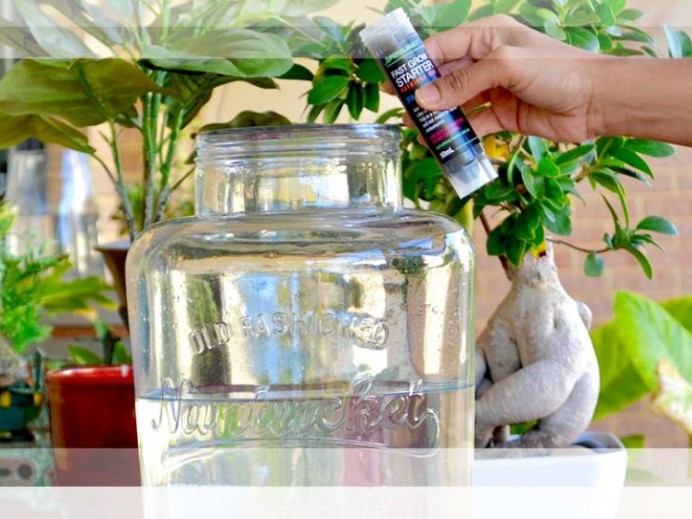
Add part b
Now add the appropriate quantity of part B after giving the tube a good shake. The quantity of Part B to add is indicated in the third row of the table above. As a general guide, for every L of nutrient solution you would add 1ml of part B.
Give the complete solution a good stir.
Step 6
Store left over Nutrient Mix in a cool, dark place.
Purpose of this section
You could follow the steps in the The Quick Guide section and end up with 100s of liters of healthy spirulina. As you may have gathered, growing spirulina is not rocket science. However, as with getting proficient at anything, it pays to have a deeper understanding of the key elements involved so you can more easily trouble shoot, make adjustments or innovate. This section provides more information on the important elements that will influence the health and productivity of your spirulina culture.
Light

Sunlight is best
Remember, Spirulina, like grass and trees, is a photosynthetic organism. It uses the sun’s energy to turn carbon dioxide into sugar, which it uses to feed itself with and as a building block for various parts of its body. In this sense, light is like Spirulina’s food.
This means the quantity and quality of light reaching your culture is of vital importance and will determine how well it grows.
When your Spirulina culture is thriving and strong, the general rule is that the more light, the better. Thus, the more surface area of the culture exposed to the light, the faster it will grow.
Sunlight is best because it carries a lot more energy than even the strongest light globe and is composed of the correct light wavelengths that spirulina uses for photosynthesis.

Spirulina is a highly efficient photosynthetic organism that uses a broad range of light, with a special reliance on orange and red light captured by its unique phycocyanin pigment, complemented by the standard blue and red absorption of chlorophyll-a.
A typical light abosorption spectrum for spirulina looks like this:
- ~430 nm (Blue): Absorbed by Chlorophyll-a and Carotenoids.
- ~620 nm (Orange): Absorbed strongly by Phycocyanin.
- ~680 nm (Red): Absorbed by Chlorophyll-a and Allophycocyanin.
However, with sunlight, there are two caveats to the more-light-the-better rule:
- Sunlight carries a lot of energy and will heat your culture tank (bioreactor) up very quickly, particularly if the ambient temperature is hot. That is why it is important to monitor the temperature of your culture. You may need to shade the bioreactor to reduce the heat load during the hottest times of the day. Remember, you don't want your culture getting hotter than 42oC.
- When the culture is young and not very dense, too much sunshine can hurt them. They get sunburnt. Therefore, when you are growing your culture up after first receiving it you will need to shade it. You can do this by placing some see through fabric over the culture vessel.
As your culture grows and becomes denser it will shade itself. When assessing if you should shade your culture the general rule is: if you can see all the way through the culture, or most of the way in, then you should shade it.
Artificial light
While spirulina thrives in bright, natural sunlight, achieving consistent, year-round growth often requires supplemental or fully artificial lighting. This is especially true if you are growing indoors, in a garage, or in a location with limited winter sun. The good news is that spirulina does not require overly complex or expensive lighting setups. The key is to provide the right type and amount of light for your culture to photosynthesize efficiently.
For the home grower, LED lights are overwhelmingly the best choice. They are energy-efficient, produce very little heat (which is crucial to avoid overheating your culture), and can be tuned to the specific light spectrum that spirulina uses best. Look for LED shop lights, grow panels, or even high-output LED strips. When selecting a light, pay attention to the color temperature, measured in Kelvins (K). Spirulina absorbs light most effectively in the red and blue parts of the spectrum. A light with a "cool white" or "daylight" rating (around 6500K) is ideal, as it provides a full spectrum of light with a strong blue component and a good amount of red, closely mimicking the ideal conditions for photosynthesis.
You can of course buy lighting that is specifically designed for growing plants. These can often be found in hydroponic shops.

The intensity and duration of light are also important. Your spirulina culture thrives if it can receive 10 to 18 hours of light per day, which can be easily managed with a simple plug-in timer. The light should be suspended close to the surface of the culture—typically 15 to 30 centimeters (6 to 12 inches) above the tank—to ensure the light penetrates effectively. A useful sign that your lighting is sufficient is a rich, dark blue-green colour; if the culture appears pale or yellowish, it is likely light-starved. Remember, spirulina does require a dark period to respire, so a consistent daily cycle of light and darkness is essential for healthy, sustained growth.
Temperature
Every organism has temperature maxima and minima, beyond which, they will not survive. They will also have an optimal temperature range, within which, they will thrive. For Spirulina, the maxima and minima are from 2oC to 45oC. Thus, if you let the temperature of your culture go beyond these limits it may die. This is the most common cause of culture death, particularly in warm sunny climates, when the culture volume is small.
The culture will start to grow at temperatures over 15oC. However, you will get optimal growth at temperatures between 27 – 37ºC.
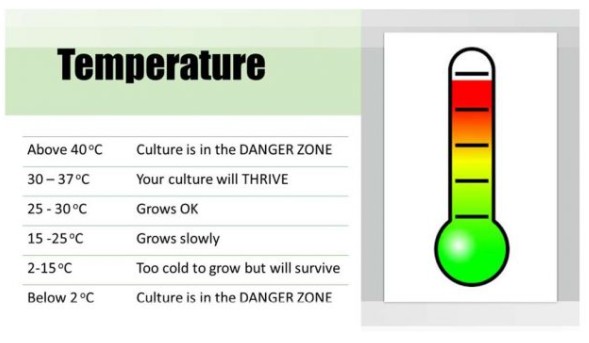
Outdoor temperatures fluctuate on a day-night cycle as the sun comes and goes. Many organisms, like Spirulina, are adapted to this and prefer a smooth diurnal temperature fluctuation rather than a constant temperature. Remember, Spirulina is an ancient organism and is kind of set in its ways.
The bottom line is that it is good for the culture to get a bit cooler during the night and warmer during the day. What Spirulina does not like, is sudden temperature fluctuations. This can occur when adding growth media, which has a large difference in temperature, to the culture; beware of doing this.
TAKE HOME MESSAGE – the temperature is important to monitor and control. If the temperature is too cold use an aquarium heater and if it gets too warm then shade it.
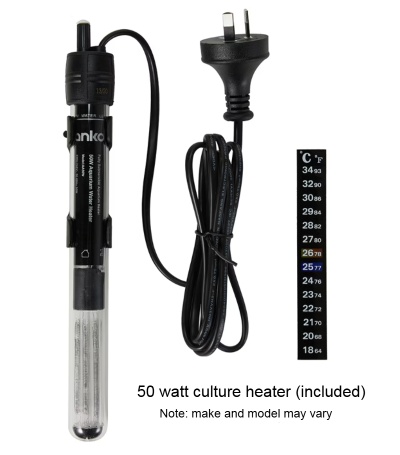
Important equipment to have.
Water

Most of the growth medium is composed of water. Water with some dissolved nutrients. As such the quality of the water is important because Spirulina will absorb whatever is in its environment. This means that it will accumulate heavy metals and other toxins if they are present in the water, which is not good because the whole point of growing Spirulina is to eat it and be healthy.
Further, certain elements can kill Spirulina at critical concentrations, chlorine, and copper for example. Since tap water is usually chlorinated, you cannot use tap water without removing the chlorine first. Remember the whole point of chlorinating tap water is to kill microorganisms. Likewise, ensure that you do not use copper implements or containers when growing Spirulina – copper kills microorganisms too.
The aim is to use good-quality water. There are various options:
- Fresh rainwater. If it has been sitting in a tank you need to filter it to remove any microorganisms or small insect larvae, such as mosquitoes.
- Chemically de-chlorinate tap water using an aquarium water conditioning solution (eg Api tap water conditioner).
- Bottled water: This is good at the start but can get a bit expensive if you have a large bioreactor.
- Fresh, river or spring water can also be used as long as it has been sanitized using either UV light or a carbon filter (the Brita type). This is necessary to remove other micro-organisms such as algae or protozoa which can compete with or eat the spirulina. This is more of a risk at the start of the culture when the culture is still weak and the pH is still relatively low.
pH
The pH is a measure of the number of hydrogen ions in a solution. Another way of saying this is, pH indicates the acidity or alkalinity of a solution.
The pH scale goes from 0 to 14 and is measured on a base 10 logarithmic scale which means that when the pH increases by 1, the actual alkalizing activity increases by an order of magnitude. For example, a pH of 2 represents a 100-fold increase from pH of 1. A pH of 3 represents a 1000-fold increase.
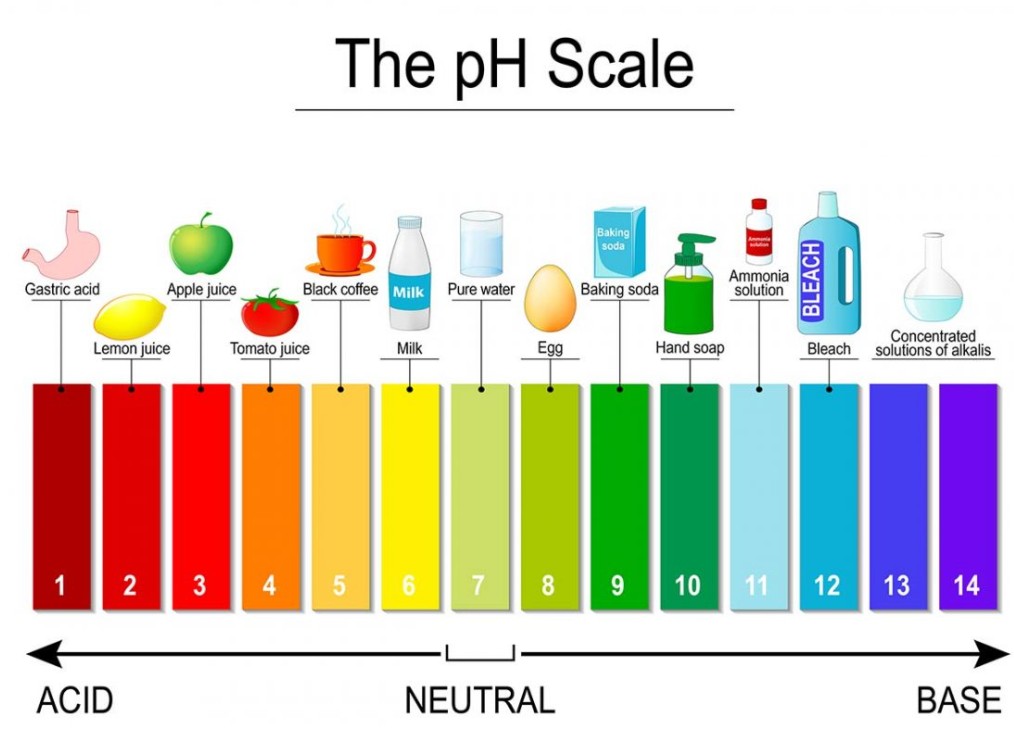
Maintaining the correct pH level is important for successfully growing healthy spirulina.
Spirulina thrives in a distinctly alkaline environment, typically between pH 8.3 and 10.5. This specific range is essential because it directly controls the availability of nutrients in the medium. When the pH is correct, spirulina can efficiently absorb the carbon dioxide and minerals it needs for photosynthesis and growth. If the pH drifts outside this optimal window, key nutrients like iron can become "locked up" and unavailable, leading to slowed growth, pale color, and poor health in your culture. Think of pH as the key that unlocks the nutritional value of your growing solution for your spirulina.
Furthermore, the alkalinity of the water serves as a powerful natural defense system. Most common contaminants, such as green algae and predatory zooplankton, cannot survive in the harsh, high-pH conditions that spirulina loves. By diligently keeping your culture within the target alkaline range, you are not only feeding your spirulina but also creating an environment that is naturally resistant to invasion.
Generally if you have the well formulated stating nutrient mix, such as our Fast Grow pack, the starting pH will be around 8.5. As the culture grows and metabolizes it slowly increases the pH. We recommend only harvesting spirulina once the pH reaches 10. This greatly reduces the risk of ingesting potentially harmful organisms.
Once the pH goes past 11 the growth rate will slow down. You can reduce the pH by pumping CO2 through the culture or adding diluted vinegar. However, we would recommend renewing all or part of the medium by starting fresh. You can do this by harvesting out the spirulina and discarding all or part of the filtrate and replacing it with fresh medium.
nutrients
Spirulina needs nutrients grow and thrive. You have to feed it,
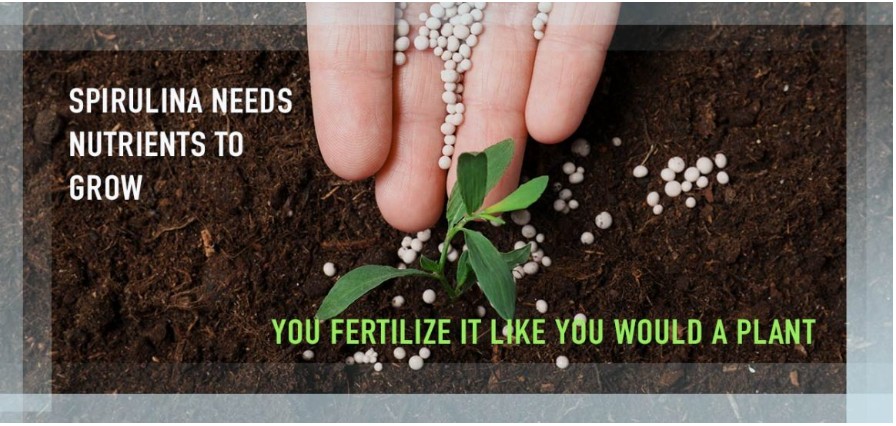
The Macro Nutrient Requirements:
Providing a balanced and readily available supply of the four main macronutrients in the culture medium is non-negotiable for achieving rapid, healthy, and high-yield spirulina production. These macro nutrients are as follows
Carbon (C). As with all life on earth carbo forms the backbone of most organic molecules that make up the body of living creatures. Spirulina is no exception to this and thus requires a source of carbon to multiply. Like other photosynthetic organisms it manufactures the organic molecules it requires by using light energy to metabolize carbon dioxide.
When you grow spirulina it uses the small amount of CO2 that is able to dissolve in the water that it is cultured in. However, to increase the growth rate of the culture we need to significantly the boost the available CO2 by adding sodium bicarbonate or baking soda (NaCO3).
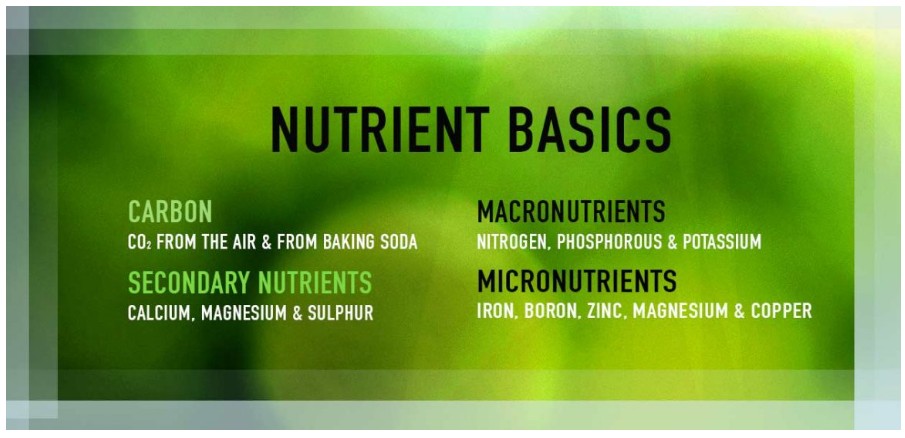
Nitrogen (N). Nitrogen is the most crucial of the macro nutrients, as it is the central component of proteins, which constitute up to 60-70% of spirulina's dry weight, and of chlorophyll, which is essential for photosynthesis Spirulina, and plants in general, use nitrogen in the "fixed" format. That is, elemental nitrogen (N) bonded with other elements, such as oxygen to make nitrate (NO3-1) or urea, which is nitrogen bonded with oxygen, carbon, and hydrogen (NH2CONH2). In these formats, the nitrogen is soluble in water and thus available for uptake by the reproducing Spirulina.
Potassium Nitrate is a common source of nitrogen salt used for fertilizing crops and, in this case, Spirulina. This compound has the added advantage of also supplying potassium, which is another vital macro nutrient.
Potassium (K) and phosphorus (P). Potassium is vital for enzyme activation and maintaining the internal electrical balance of the cells, while Phosphorus is a key component of ATP (the energy currency of the cell) and nucleic acids (DNA/RNA).
secondary nutrients and micronutrients :
While macronutrients form the foundation of spirulina's growth, a healthy culture also depends on a suite of secondary nutrients and micronutrients. Secondary nutrients, including Magnesium (Mg) and Sulfur (S), are required in smaller but still significant amounts; magnesium is the central atom in the chlorophyll molecule, making it essential for photosynthesis, while sulfur is a key component of certain amino acids and vitamins.
The micronutrients, or trace elements, are needed only in minute quantities but are just as critical. Chief among these is Iron (Fe), which is a vital part of the electron transport chain during photosynthesis and is often the first deficiency to appear, signaled by a paling of the culture's blue-green color.
Other essential trace elements include Zinc (Zn), Copper (Cu), Calcium(Ca), and Molybdenum (Mo), which act as co-factors for a wide range of enzymes driving cellular processes.
For the hobby grower, these nutrients are typically supplied through a pre-mixed mineral solution or a carefully balanced blend of individual food-grade salts to ensure the spirulina has access to the complete nutritional palette it needs to thrive.
Our Nutrient Blends :
We supply 2 nutrient blends. Fast Grow and Postharvest Nutrients.
The Fast Grow mix provides a blend heavy in Sodium Bicarbonate to set up the CO2 supply in the medium that will last for months plus a mixture of macro, secondary and micro nutrients. This 2 part mix provides the full range of nutrients required for healthy growth.
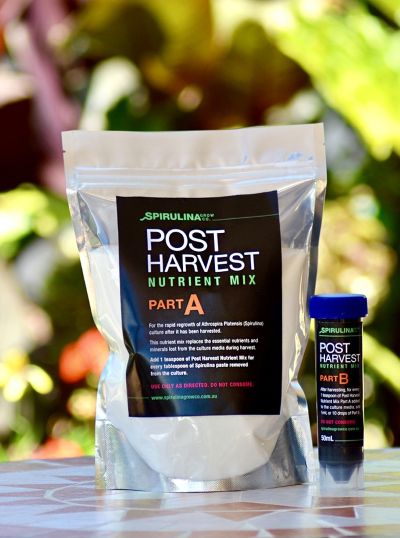
The 2 part Post Harvest mix is formulated to replace the nutrients lost to the medium as spirulina incorporates them into its cells. It is heavy in the key macro nutrients (N,P,K) whilst also providing the micronutrients required for healthy growth.
Agitation
It is essential to keep the culture moving in sunlight hours
Remember, spirulina is photosynthetic and requires sunlight to feed itself and grow. But as it grows it becomes more dense and self-shades. In a dense culture, sun cannot penetrate more than a couple of centimeters into the culture. This means that the spirulina filaments (trichomes) on outside of the culture, adjacent to the surface or transparent vessel walls, are over-exposed to light, while the trichomes on the inside are starved of light. Thus, it is it crucial to keep the culture moving during sunlight hours so that the trichomes continuously loop in and out of the light.
Note: inadequate or ineffective mixing is a very common beginners mistake.
The easiest way to keep the culture moving is to bubble air through the bioreactor. The bubbles also facilitated gas exchange with the air. To do this all you need is an aquarium air pump, some tubing, an inline value to regulate air flow, and a suction cup to stick the tube to the bottom of the bioreactor.
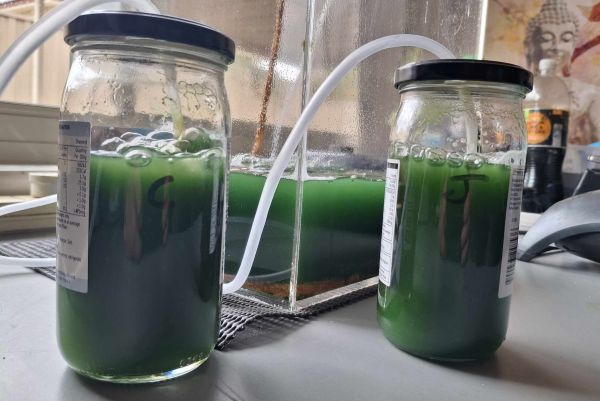
One note of caution here: Make sure that the bubbles are not too aggressive otherwise they can break up the Spirulina trichomes causing losses as cells are ruptured. If this is the case, you will find the surface of the bioreactor covered in foam caused by the contents of the ruptured cells.
You can regulate the intensity of the bubbles by installing a screw value in the airline.
To begin with, you will need some simple, easy-to-obtain equipment. You can get it all on eBay or from your local supermarket, Red Dot, hardware store, or aquarium shop. Here is a list of equipment you will need.
Required Items | Notes | Examples |
|---|---|---|
Assorted small jars/bottles | 100mll - 1000ml glass jars or bottles are perfect depending on how much you start with. |  |
5L transparent container | Ideally you want a container that is taller than it is wide - this facilitates better mixing with bubbles. the size is not critical |  |
10 - 15 L transparent container | Ideally you want a container that is taller than it is wide - this facilitates better mixing with bubbles. the size is not critical | |
30 - 100L or larger transparent vessel | The size of the vessel depends on the volume of culture you want to work with. A glass aquarium is perfect. You can often pick them up very cheap on Marketplace or Gumtree. You can also use plastic storage containers or canoe drums. | 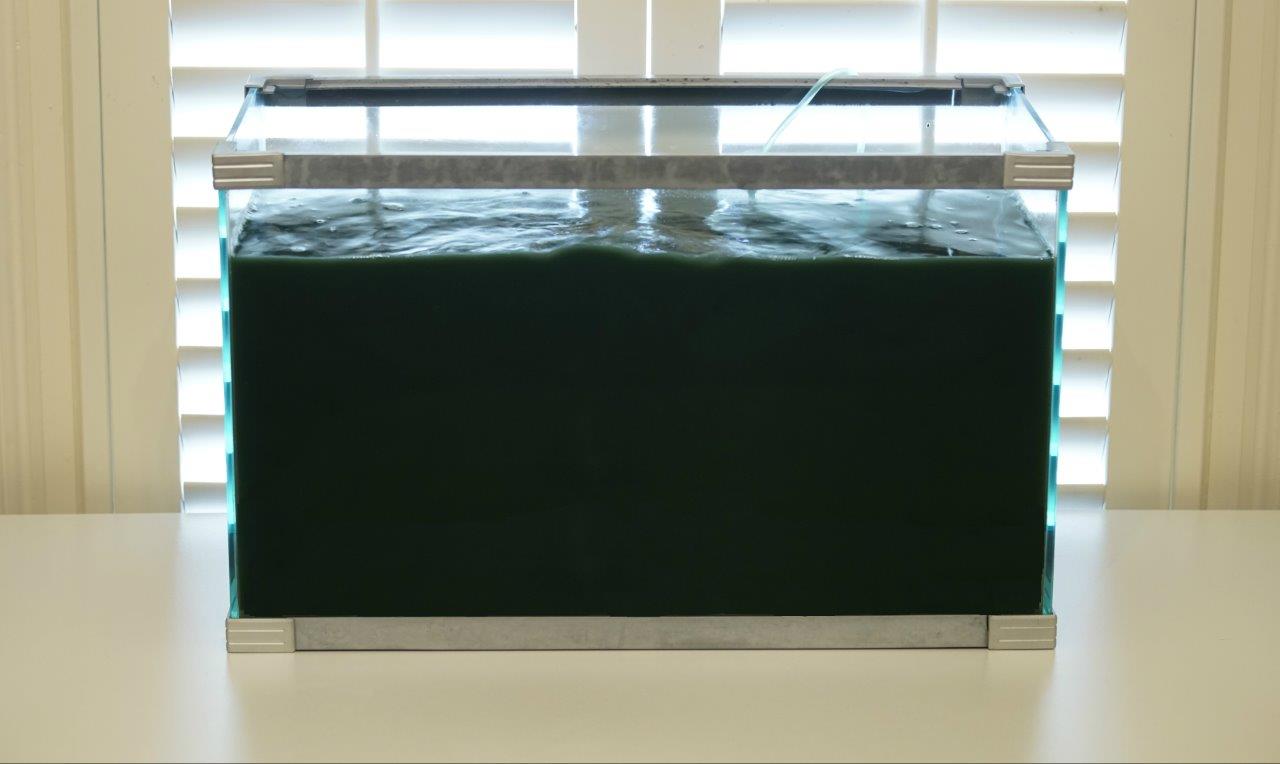 |
Digital Aquarium Thermometer with probe | Affordable option is to buy on Ebay for approx. $1.50 – $4.00 |  |
Aquarium Heater with adjustable temp control | The size of the heater you need is dependent on the volume of your culture and ambient temperature in the coldest months. For example 1 100L tank would generally require a 100 - 200w heater. | 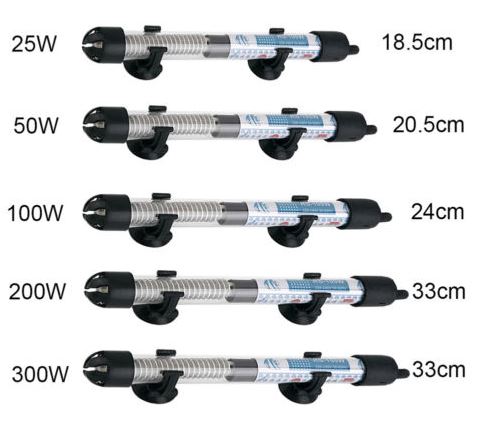 |
Aquarium air pump with multiple outlets. | with larger tanks you will require at least 2 air tubes to get adequate mixing. We highly recommend the pump pictured here. It has 4 outlets, is robust and long lasting and relatively cheap. | 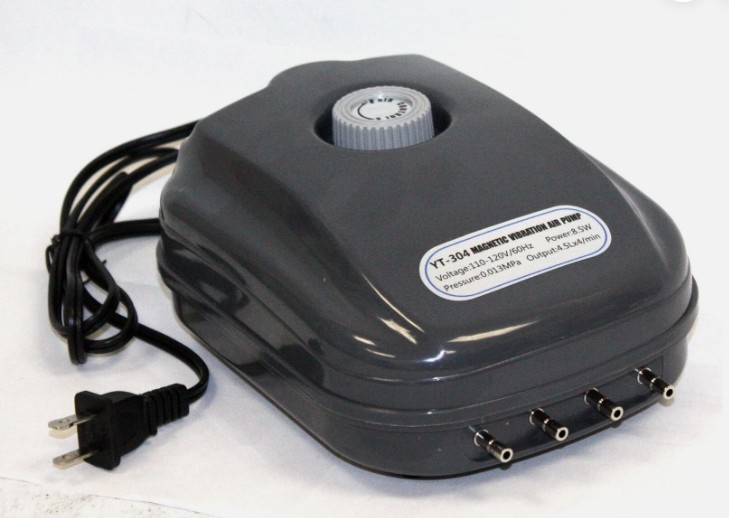 |
flexible airline tubing | Enter your text here...The best material is the flexible silicone tubing. The best size is 4mm inside diameter | 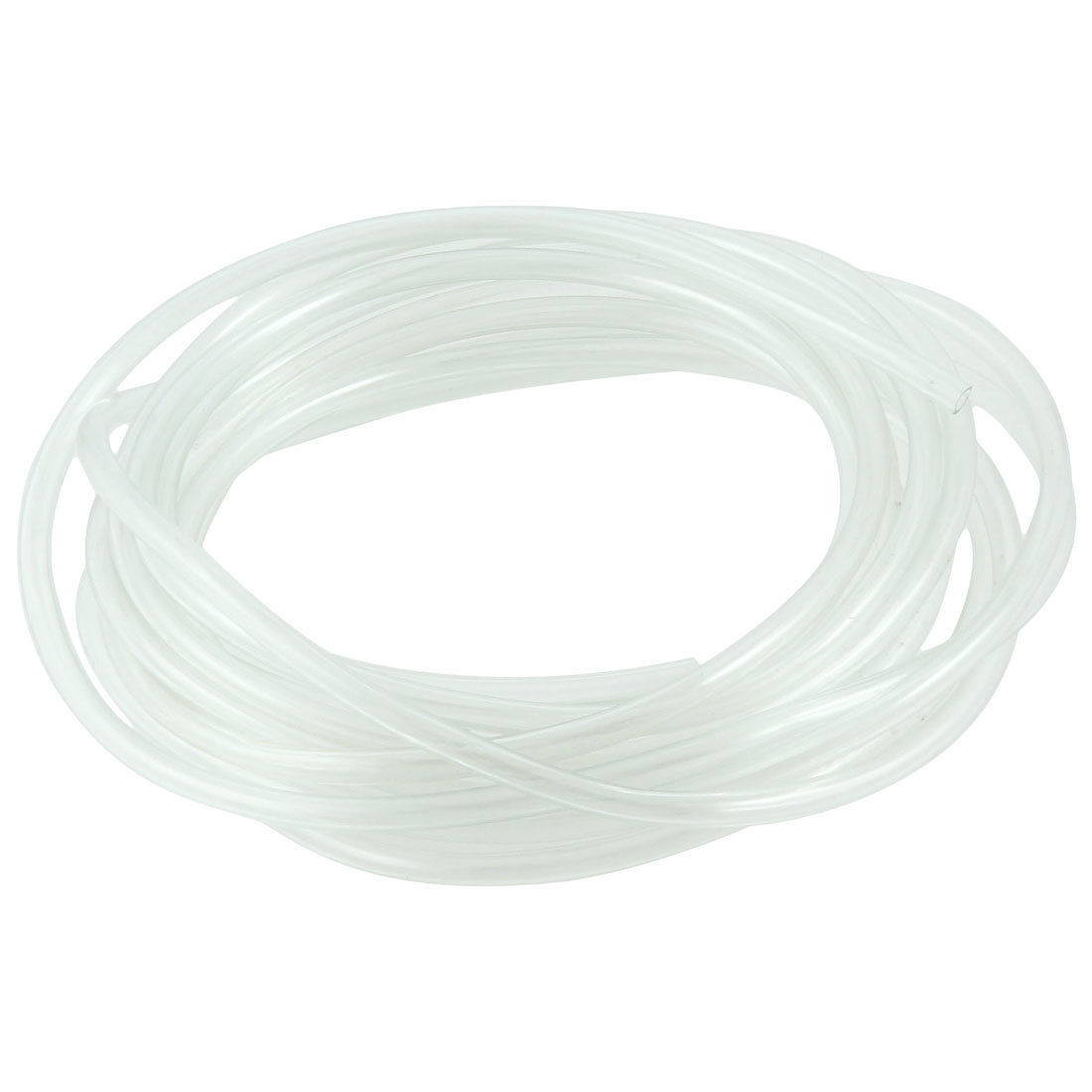 |
In-line air value | Used to regulate airflow so the bubbles are not too aggressive. Ebay or an aquarium shop. |  |
Suction cups to suit diameter of air tube | the ideal suction cap will feature a closed clasp to fit the tube through | 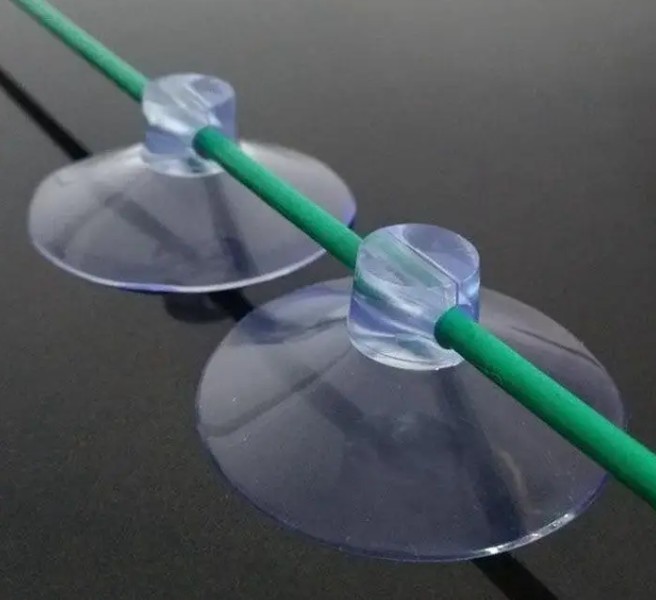 |
pH meter (or litmus paper - see below) | You can spend literally $1000s on pH meters. All you need is the simple pen type to give you and adequate indication. As always, you do get what you pay for. | 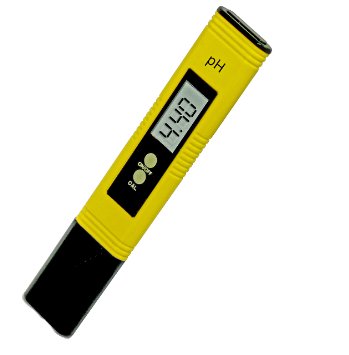 |
Litmus paper | Tried and true - litmus paper is accurate enough for your needs. It's better to get a narrow range product that captures the transition from 9 – 10 with more accuracy | 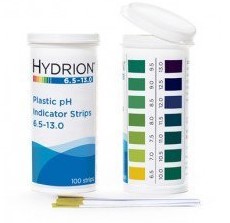 |
An assortment of 5 – 20L plastic buckets or pales | A bucket is a bucket unless you are concerned about BPA in which case you could get food grade buckets. You will use these to harvest and move the culture around | |
25 – 30 micron mesh/fabric about 1m x 1m. Or larger if you are going to make up a harvesting frame. | Used to harvest Spirulina - should be robust nylon or acrylic, the best material to use is screen printing mesh. | 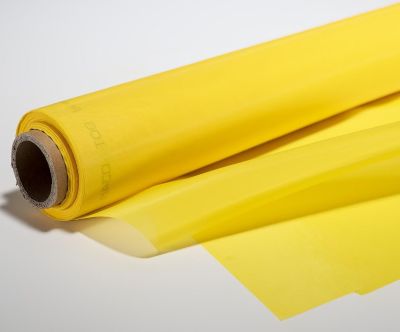 |
Mesh frame | You can buy ready made silkscreens of various sizes. These make excellent harvesting frames. Or you can make your own from decking timber. |  |
Broad plastic paint scraper | Used to harvest. |  |
How to make a simple Secchi Disk
Being able to measure the density of your culture is important because, with density, you can determine its growth rate, judge when to add nutrient growth media, and decide on the best time to harvest.
Luckily you don’t need anything complicated. You can make up an accurate instrument for under $2: a Secchi disk.
What you need:
- A chopstick or something similar
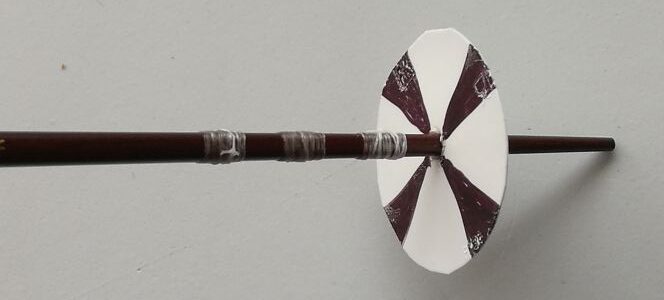
- A 55mm diameter white disk – you can cut this from a white plastic container, a yogurt container lid, for example
1. With a black marking pen, make sections on the white disk as shown in the picture.
2. Make a small hole in the center of the disk and drive the chopstick through until it is secure.
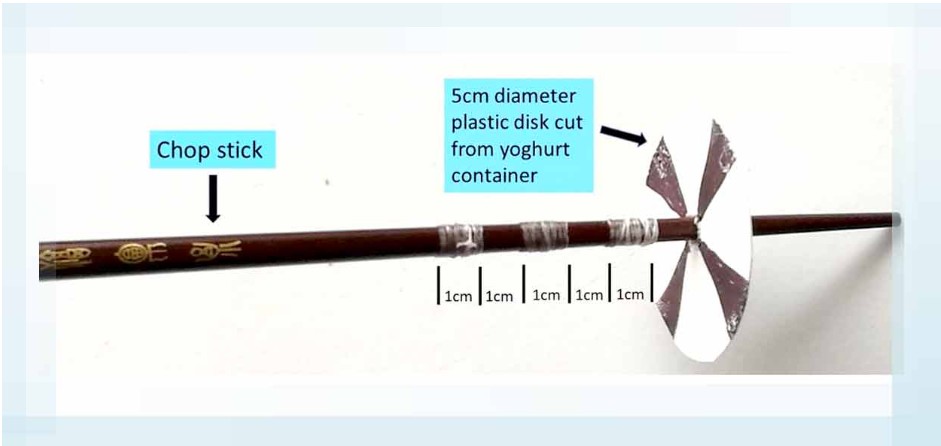
3. Make 1cm graduations from the top of the disk up the chopstick to 5cm. In the example above, dental floss was wound around the chopstick to make the gradations.
When placed upright in the culture, the depth at which the disk disappears correlates well with the density of the culture. For example, at a disappearance depth of 2cm, the density is at about 0.5 g/lt dry weight and at 4cm it drops off to 0.3g/lt.
This section explains how to set up the bioreactor (what you farm the Spirulina in – aquarium, plastic tub, etc) and grow the culture until it is harvestable.
Theoretically, you can grow 1000s of litres of culture from just 10mls of original culture. The trick is to build up slowly and pay attention to maintain optimal growing conditions.
But first a word about placement. This is important,
Placement
Before filling up your bioreactor you will need to find a permanent place for it to sit where it will receive adequate light.
Once your culture is dense and healthy (Secchi reading of under 4) the general principle is, the more sunlight it receives, the faster it will grow and, thus the more you can harvest. So, if you are going to place your bioreactor in a window then it will need to receive full light throughout the day to grow at an optimal pace.
It would be a good idea to monitor how many hours of full sun a prospective location receives a day before setting up the bioreactor there.
If an inside location is not going to give you enough hours of good sunlight then you may like to consider an outside location or supplementary lighting.
If you chose an outside location then you will need to monitor the temperature. In the summertime, you may need to shade the bioreactor to lessen the heat load during the hottest part of the day. Remember, the culture will die if it goes too much above 42oC.
Build up to final volume instructions
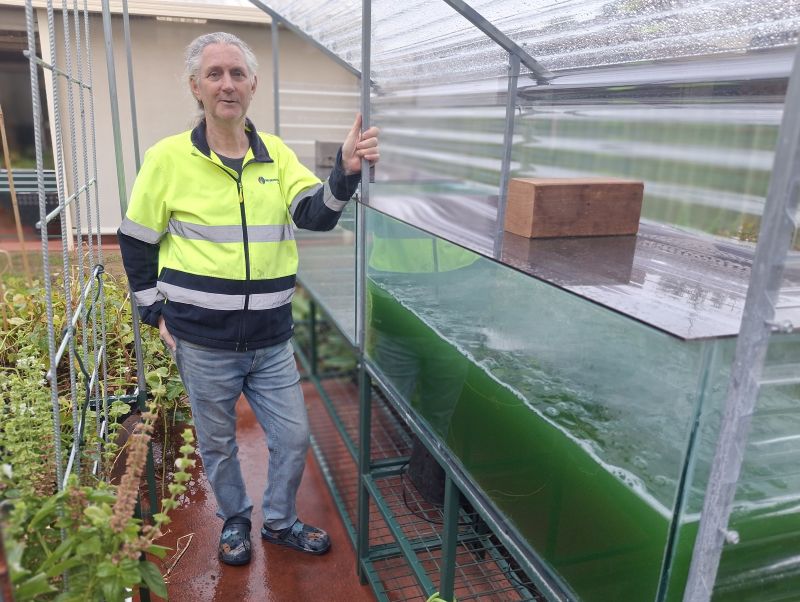
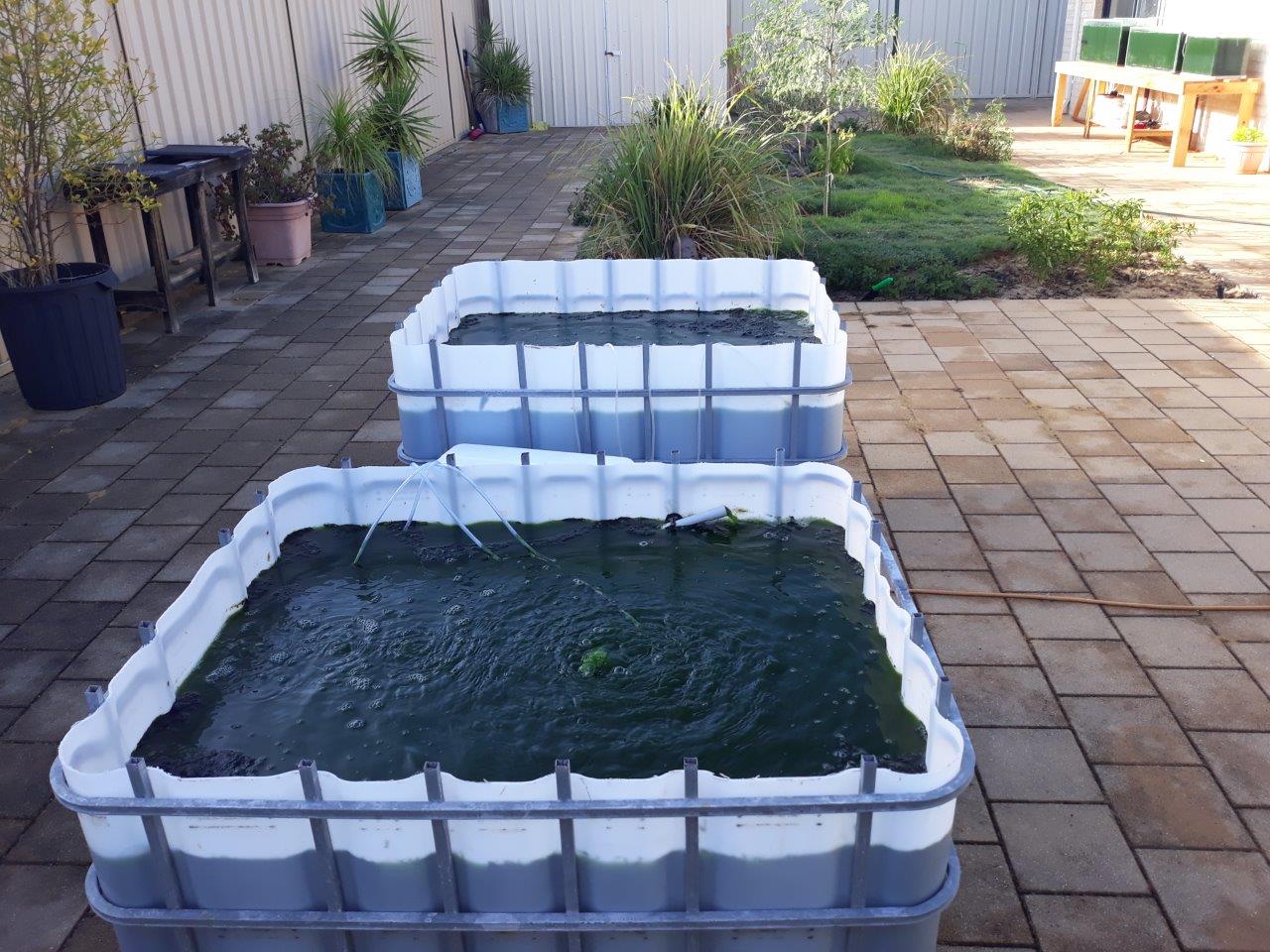
Step 1: Place the bioreactor in the final location
Step 2: Fix the heater, if you need one, onto the side or base of the bioreactor so it will be under the surface
Step 3: Fix the air tube on the bottom and in the centre of the bioreactor with a suction cup. Depending on the length of the bioreactor you may need 2 – 3 air tubes. Just check that the culture is being agitated as per the video in the Basic Elements section above. You should be able to see a swirling motion within the culture in all parts of the bioreactor. A non-swirling zone will be a dead zone where spirulina will die.
Step 4: Transfer the 10 – 15L of culture to the bioreactor. Depending on the size of the bioreactor you may need to add more culture to get an adequate movement with the bubbles. The deeper the culture the better agitation effect you will get with the bubbles.
Step 5: Put the thermometer probe into the bioreactor
Step 6: Turn on the heater if necessary. Remember the temperatures sweet-spot is between 27 – 37oC
Step 7: Ensure the air pump is switched on
Step 9: Add more nutrient solution at approximately 1/3 of the current culture volume if the secchi reading is 3 or less.
Step 10: Ensure that the bubbling is not too aggressive – make adjustments with the in-line flow valve
Step 11: Observe the culture in the sunlight to assess if the culture is being adequately mixed. You will be able to see if all parts of the culture are in motion by observing the movement of the filaments.
Step 12: Cover the top of the bioreactor with a lid
Step 13: Secure another media nutrient mix so you can increase to the maximum capacity of your bioreactor as your culture grows.
Step 14: Secure or make up a post-harvest replacement media mix for when you start harvesting. You can order both from Spirulina Grow Co if you like
Step 15: When the culture reaches a density of 3cm (Secchi disk) add more nutrient media at a rate of 1/3 of the volume of the culture.
Step 16: Monitor temperature and take steps to maintain in between 27 – 37oC
Step 17: Repeat steps 15-16 until the bioreactor is full
Step 18: Monitor the pH
Step 19: When the pH is over 10, it’s ready to harvest
When to harvest
Your culture is ready to harvest when it’s dark green or the density on Secchi disk reads 3 cm or less and the pH is over 10. Remember, it’s important to wait for the pH to get up to 10 to reduce the risk of contamination with potentially harmful organisms.
If your conditions are ideal and growth is good you can expect to harvest every 2-4 days. Remember, under ideal conditions a Spirulina culture can double its weight every 2 -4 days. Be aware that you can leave your culture unharvested for longer periods but you will suffer a significant drop in production due to the increased density, which causes a reduction in light penetration into the culture. You will also find that as the culture gets super dense it will tend to clump together and float on the surface. If this is left too long then it will go brown and start to ferment
How much to harvest
The general principle here is that you don’t want to harvest so much that the culture becomes too sparse. Sparse or dilute cultures are open to sun damage. As you harvest and return the filtrate (the solution left after filtering out the Spirulina) back to the culture, if you can see more than 4cm below the surface, then it’s time to stop. That is, if a Secchi disk reading is above 4, then stop and allow the culture to build up before further harvesting.
As you gain experience, you will be able to judge when to stop harvesting by the color change of the culture.
How to harvest
Harvesting is easy. All you need to do is filter the culture through a fine mesh. Of course, there are a few tricks and ways to do it more efficiently.
The following video describes how to harvest using a piece of filter mesh and a bucket:
- As noted in the video, it is best to use silk screen fabric. It’s robust, industrial-strength fabric, and the mesh size is precise.
- Do not use a mesh size larger than 50 microns. The best is between 37 – 44 microns.
- You can buy mesh from a silkscreen shop or from our shop. The advantage of buying from us is that you don’t have to buy a whole meter of the material at a much greater expense.
- Remember to wash all your equipment before and after use. Stay clean. Remember, you will be eating the harvest.
A more efficient method - the frame harvest
The most efficient way to harvest Spirulina is by using a mesh frame that fits your bioreactor. A mesh frame is made by stretching and fixing the filter fabric (mesh) onto a frame so it is taut. If you are a bit handy, you can easily make one using wood, screws, staples, glue and varnish. Or get a handyman to make one for you. It’s well worth the effort or expense. You can also buy ready-made silkscreens from a silkscreen supplier as per the picture below:
A professional screen printing frame.
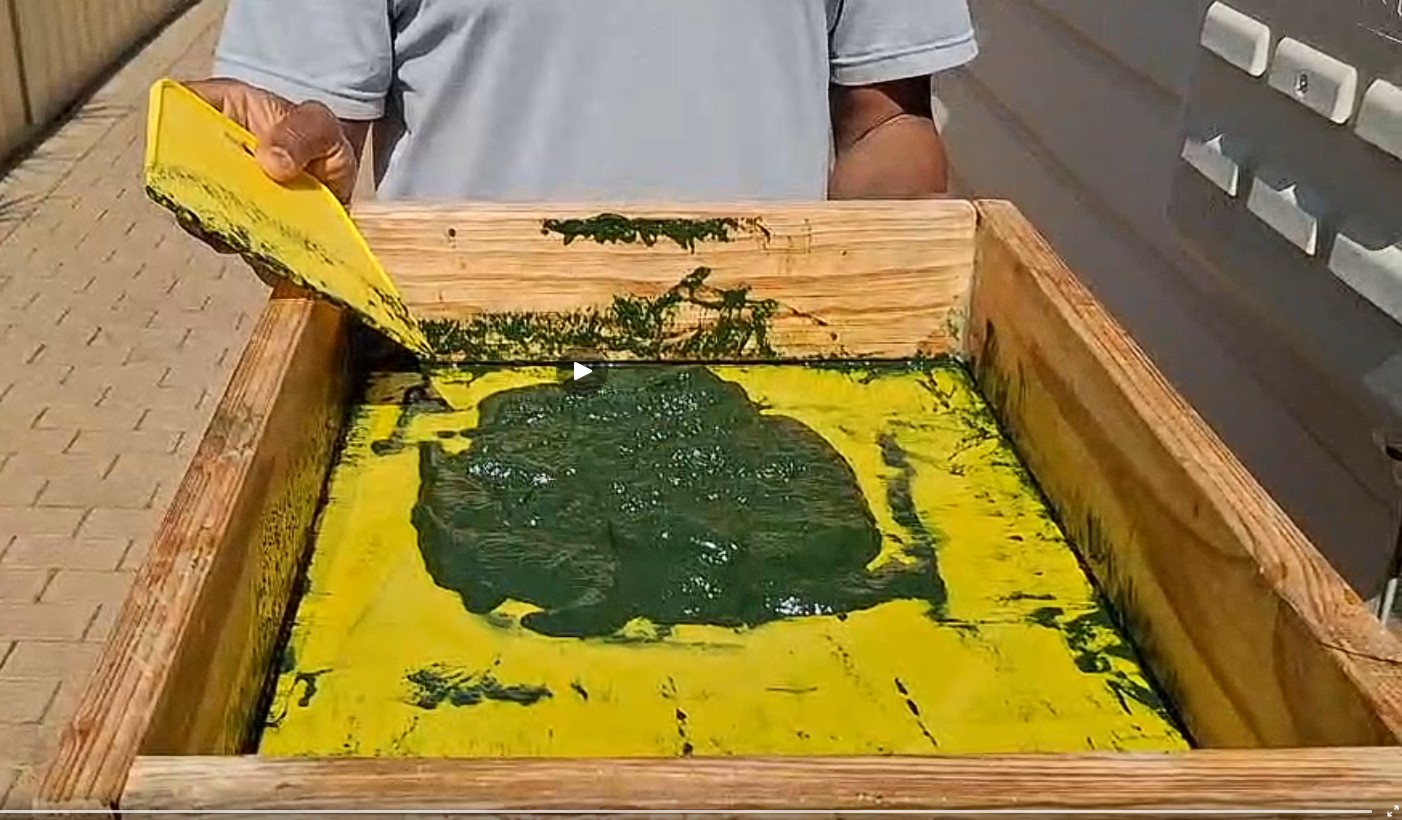
A harvest frame made with pine decking wood and screen printing fabric
The video below shows one of our customers harvesting using a mesh frame:
- You should only harvest Spirulina which is dark green. If you see brown, white, or yellow bits floating around, scoop them out of your tank and do not eat them.
- Remember to immediately wash your mesh screen after use. If you allow the Spirulina paste to dry it will be difficult to remove from the mesh pores later.
- Store harvested Spirulina paste in a clean glass container in the fridge. It will last up to 5 days. Remember, the nose knows. If it smells off then don’t eat it.
- You can also freeze excess material. Ice cube makers are perfect. Spirulina soaks up smells very rapidly so wrap your ice-cube trays with cling wrap
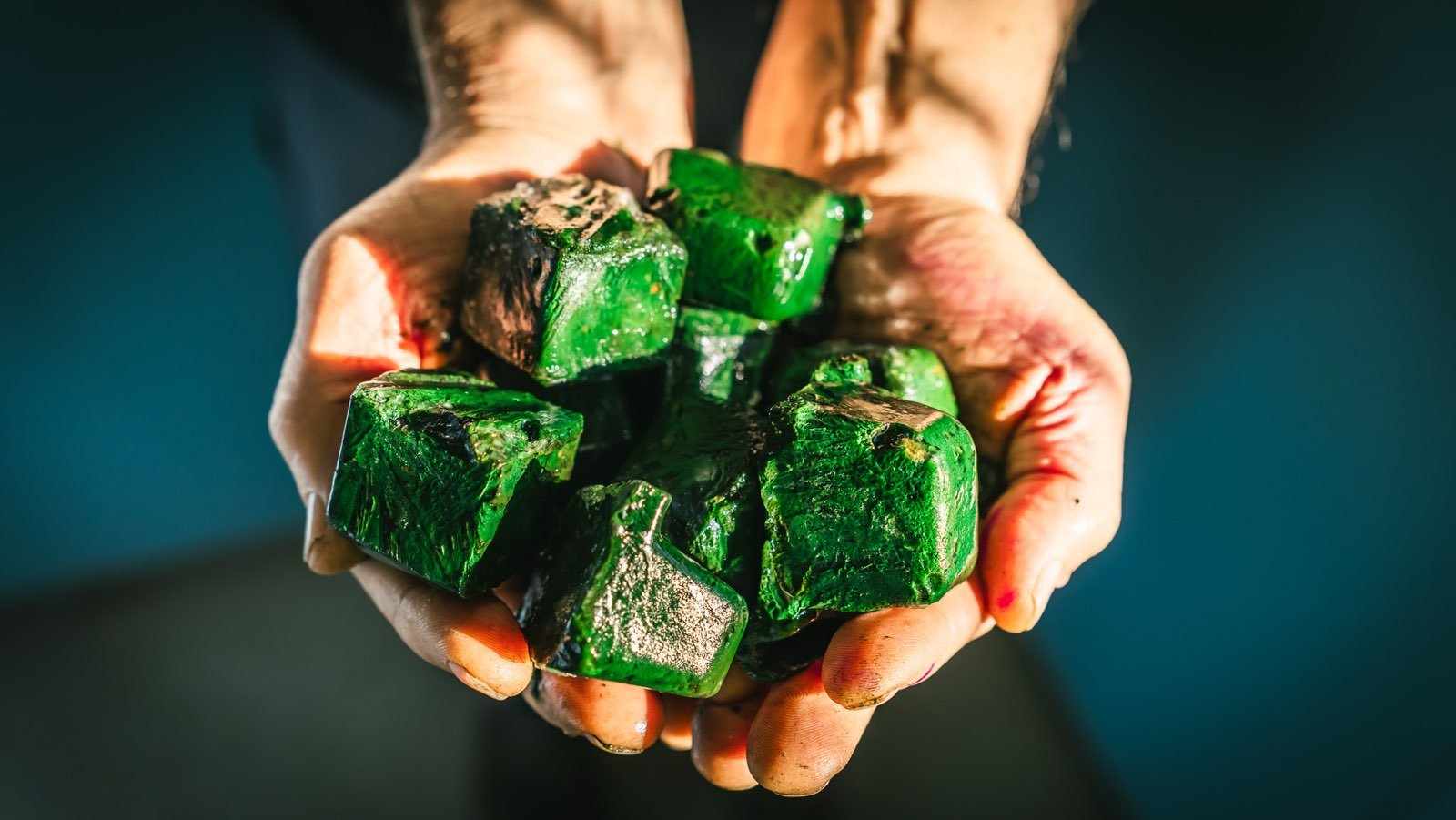

The best way to store your fresh spirulina is to freeze and vacuum pack it.
You have to give back to the culture to keep it producing.
Spirulina is a bit like the golden goose. It will keep yielding superfood gold but you have to feed it.
As spirulina grows, and it does this rapidly, it takes nutrients from the growth medium an uses them to make new trichomes. Over time the nutrients in the medium are depleted and you must replace them.
What to feed your culture
The nutrient mix you use for post-harvest feeding is different than the nutrient formula used to build up the volume of your culture.
There are various formulas you can find online to make up your post-harvest mix. Most ingredients are easy to find in the marketplace but the problem is buying them in relatively small amounts can be expensive. It is much better to buy different components in bulk.
You can buy the post-harvest mix from our shop if you don’t want the up front expense of buying in bulk or messing around with formulation. This is a good way to start. As you gain confidence and experience you can experiment with your own formulations
How much to feed
With our Post Harvest nutrient formulation you would feed at a rate of 70g/kg of harvested dewatered paste. In this case dewatered does not mean dehydrated. When you harvest spirulina you end up with a thick paste you should aim to squeeze as much water out of the paste as possible to it has a jelly like consistency. You weigh this and then feed accordingly. the following table gives you some feeding rates for different harvest rates.
HARVEST WEIGHT | NUTRIENT WEIGHT | HARVEST WEIGHT | NUTRIENT WEIGHT |
|---|---|---|---|
100g | 8g | 600g | 48g |
150g | 12g | 650g | 52g |
200g | 16g | 700g | 56g |
250g | 20g | 750g | 60g |
300g | 24g | 800g | 64g |
350g | 28g | 850g | 68g |
400g | 32g | 900g | 72g |
450g | 36g | 950g | 76g |
500g | 40g | 1000g | 80g |
550g | 44g | 1050g | 84g |
Coming soon
How is your culture doing? Tell us about it - help us and the next grower.

Are you growing successfully? Your review helps newcomers feel confident buying their first culture and also helps us improve this guide and our services. Just few sentences — did it arrive healthy? Is it thriving? What advice would you give a new grower? How could we improve?
Got photos of your thriving culture? Email it to ken@spirulinagrowco.com.au with your name — I'll add it to your review.
You can leave your review here
Everything you need to start growing your own fresh spirulina
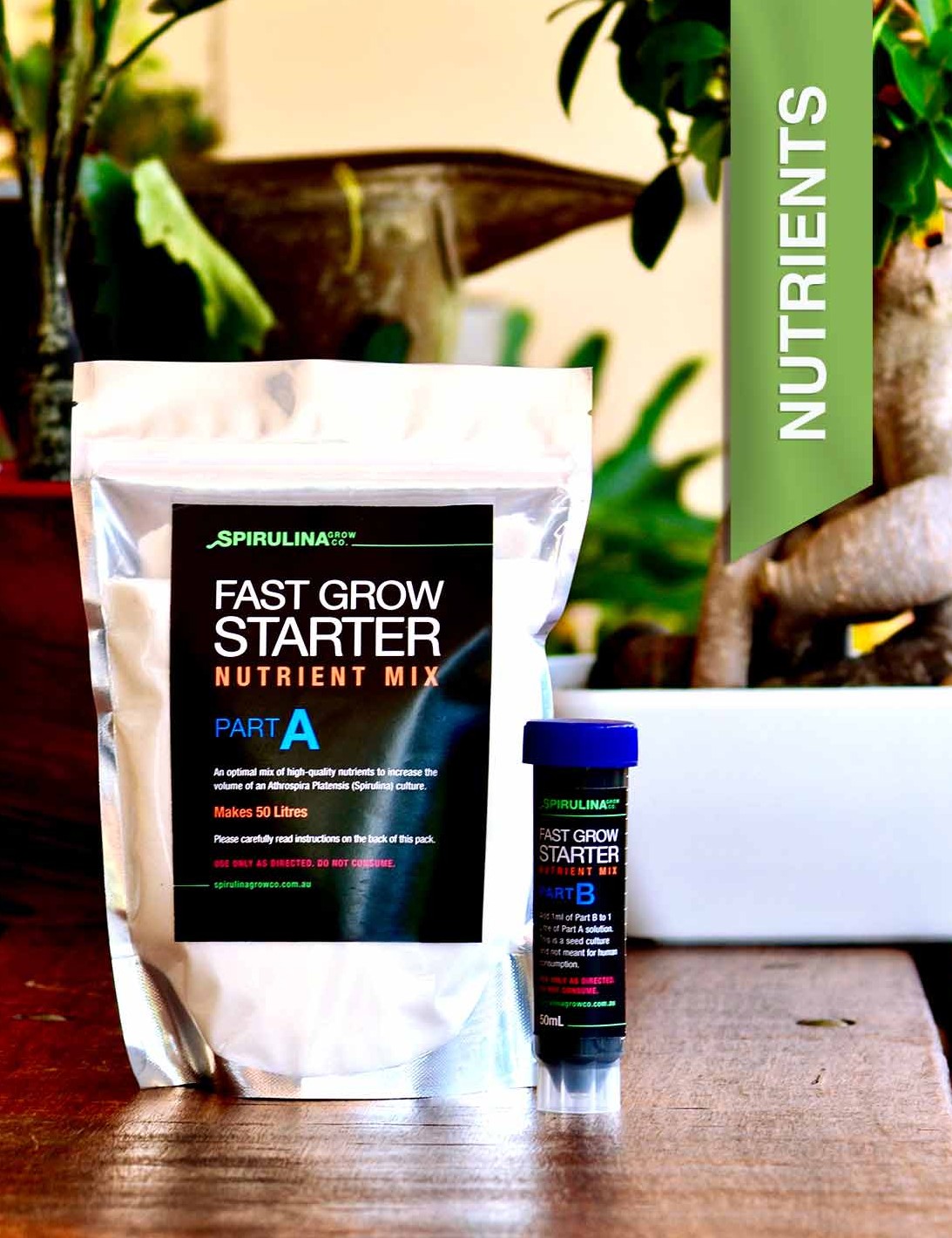
Fast Grow Starter Nutrient Pack For Cultivating your Spirulina
The starter nutrient pack is specially formulated for the rapid and healthy growth of your Spirulina culture. These nutrients are free from contaminants and heavy metals.
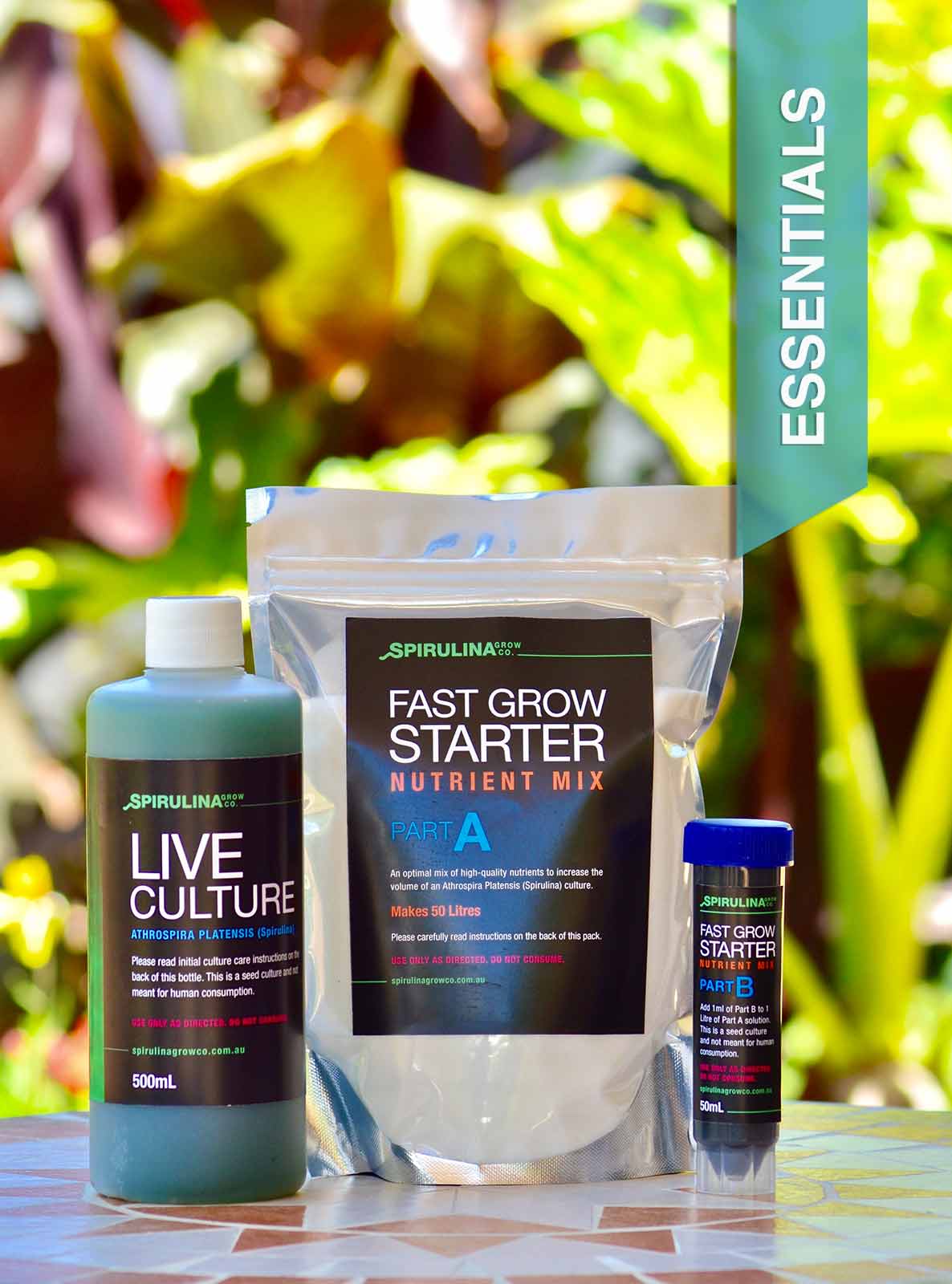
500 ml live Spirulina culture and Fast Grow starter nutrient pack
The 500 ml live culture and starter nutrient pack along with the comprehensive instruction manual contain the essential components needed to get your spirulina micro-farm established.
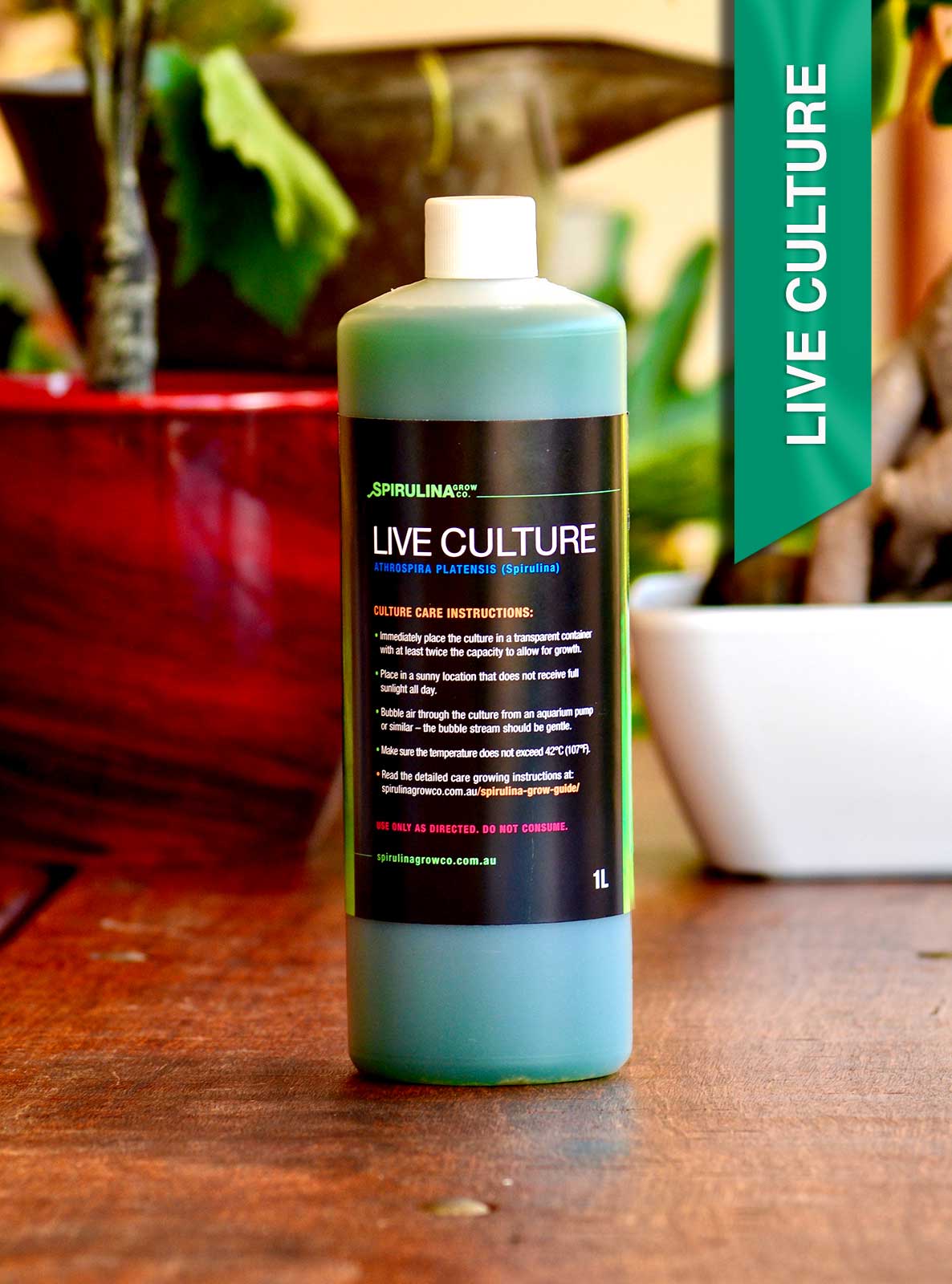
1000 ml of live seed culture - checked for purity
If you feel comfortable formulating and sourcing your own starter nutrient mix then the 1-liter live starter culture is all you need from us to get your Spirulina micro-farm established.
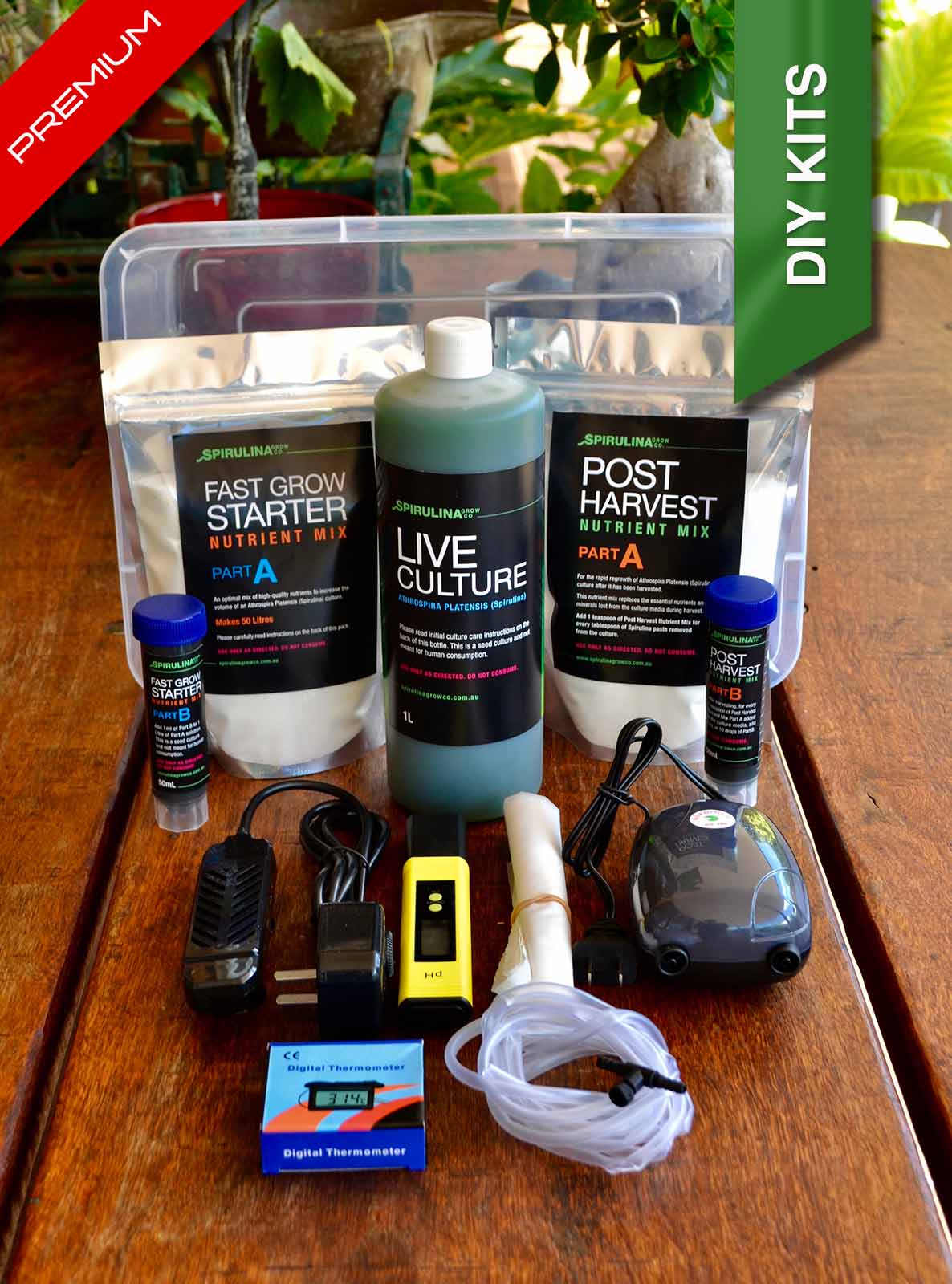
Premium Spirulina Farming Kit – Everything you need to start!
This Premium Spirulina kit that contains all the essential information, equipment, nutrients and culture needed to start, monitor, maintain and harvest your own Spirulina at home
Copyright 2026 , all rights reserved.